
Skybasic Wireless Digital Microscope
4.2Editor score
WiFi and USB connectivity
Adjustable LED lighting
Portable handheld design
Discovering the hidden world of insects requires the right tools. A digital microscope allows you to capture detailed images and videos of tiny creatures, making observation engaging and educational for all ages.
We evaluated ten top-rated models based on magnification power, connectivity options, screen quality, and ease of use. Each product offers unique features suited for fieldwork, classroom settings, or backyard exploration.
Each pick highlights key strengths and ideal user scenarios to guide your decision. Prices and availability change frequently, so verify current details before purchasing to ensure you get the best value for your needs.
4.2Editor score

4.5Editor score

4.3Editor score
As an Amazon Associate we earn from qualifying purchases.
This side-by-side comparison highlights the core specifications and capabilities of each model. Use it to quickly identify which microscope aligns with your specific needs for insect study and field exploration.
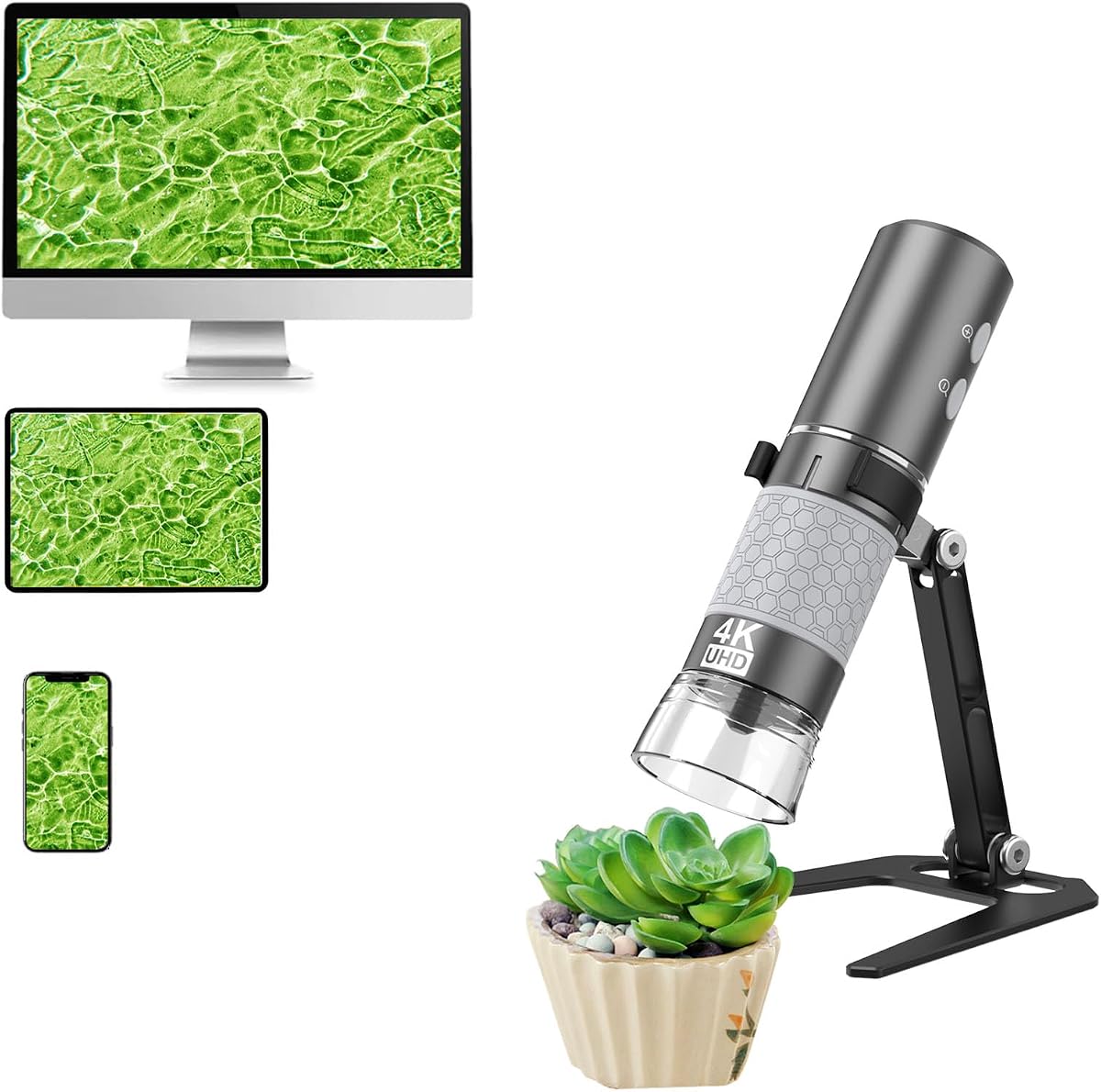



The Skybasic Wireless Digital Microscope offers an affordable entry into digital microscopy. With magnification ranging from 50x to 1000x, it delivers clear images for casual insect studies and outdoor exploration.
We may earn a commission when you buy through this link, at no additional cost to you.
Its wireless connectivity allows seamless pairing with smartphones via WiFi, while USB supports PC use. The eight adjustable LEDs ensure optimal lighting for capturing detailed textures of insect wings or legs.
Users note it functions best as a handheld magnifier rather than a traditional microscope. The focal length is fixed, requiring careful positioning to maintain sharpness, which may take practice during fieldwork.
Ideal for students and hobbyists on a budget, this model balances portability and functionality. It serves well for documenting backyard discoveries without needing complex setup or expensive equipment.
Connect to smartphones wirelessly or use USB cables with computers for flexible viewing and sharing options during exploration.
Weighing little and compact, it fits easily in a pocket, making it perfect for hiking or outdoor observation trips.
We may earn a commission when you buy through this link, at no additional cost to you.
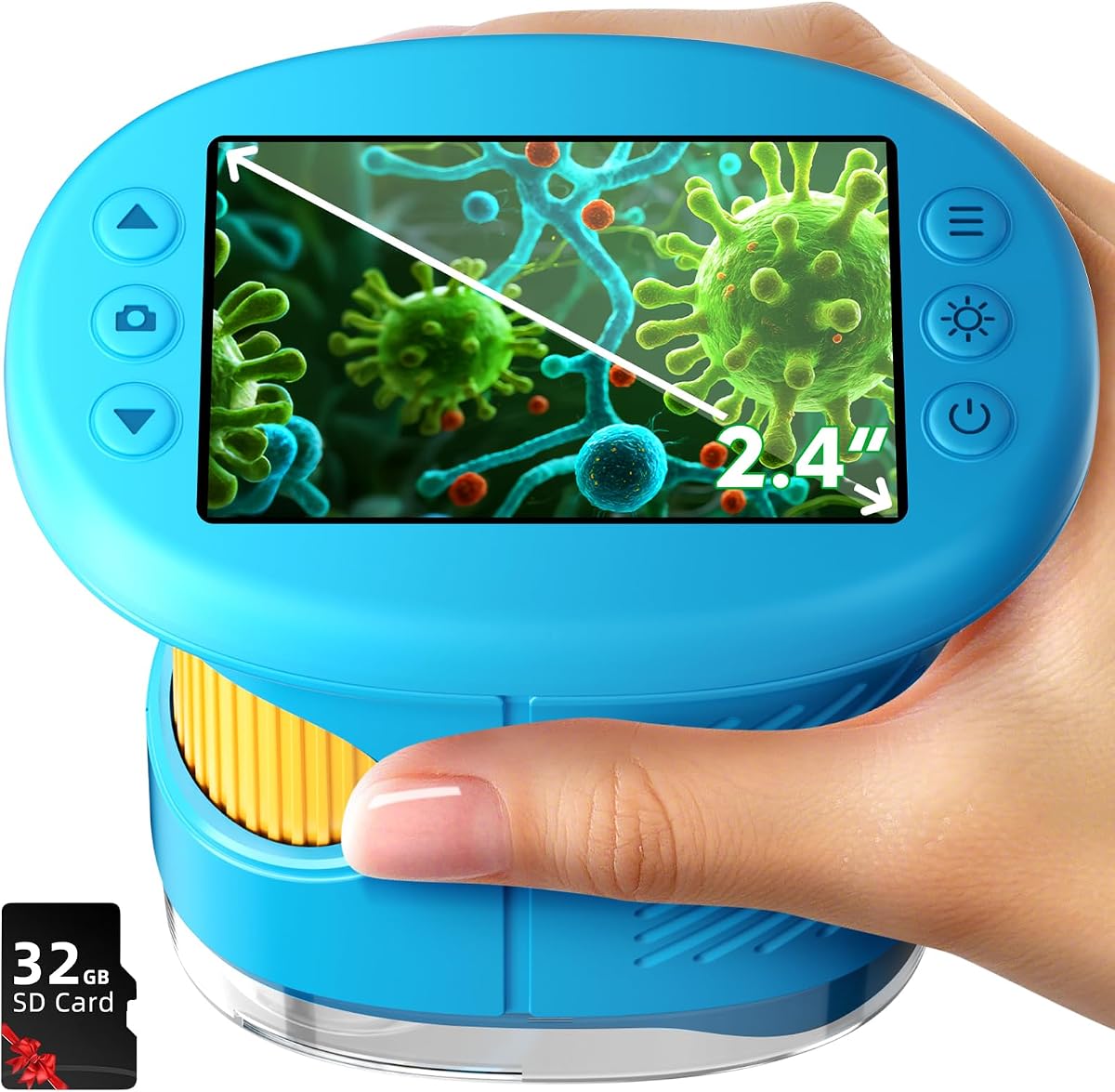
Designed for young explorers, the Odatay microscope combines simplicity with powerful imaging. Its 4K camera and built-in screen enable instant viewing without needing a separate device or app.
We may earn a commission when you buy through this link, at no additional cost to you.
The kit includes a 32GB card and prepared slides, readying kids for immediate use. Bright LED lights and adjustable magnification help reveal intricate insect details like eye structures or antennae clearly.
While lightweight, the focus wheel requires steady hands. Some users report occasional alignment issues in bright sunlight, but indoor or shaded use yields consistent and impressive results for STEM learning.
Perfect for ages 3 to 12, this model sparks curiosity and scientific inquiry. It is a practical, educational gift that balances fun and learning through hands-on observation of the natural world.
Prepared slides and storage cards simplify setup, allowing children to start exploring insects and plants immediately.
The included neck strap enables easy carrying, freeing hands to collect specimens during outdoor nature walks.
We may earn a commission when you buy through this link, at no additional cost to you.
This 4K WiFi microscope offers superior image quality compared to standard models. Its high-resolution sensor captures minute insect details with stunning clarity, ideal for documentation or educational presentations.
We may earn a commission when you buy through this link, at no additional cost to you.
With four hours of battery life, it supports extended field use without constant recharging. The flexible bracket allows steady mounting, while cross-platform software ensures broad accessibility across devices.
Users must adjust brightness carefully to avoid glare on certain specimens. Connectivity can require initial troubleshooting, but once set, the wireless streaming experience is smooth and reliable for sharing observations.
For serious enthusiasts or teachers, this model provides professional-grade features. The balance of resolution, portability, and endurance makes it a top choice for detailed insect study and research.
True 4K resolution reveals intricate textures and patterns, enhancing the educational value of microscopic observations.
Long battery life supports uninterrupted exploration during outdoor trips or classroom activities without needing constant charging.
We may earn a commission when you buy through this link, at no additional cost to you.
The Andonstar AD246S-M is built for versatility across applications like biology, electronics, and coin collecting. Three lenses allow users to switch between low and high magnification easily for diverse subjects.
We may earn a commission when you buy through this link, at no additional cost to you.
HDMI output enables presentation-quality displays, while measurement software supports precise analysis. The sturdy boom stand ensures stability even during delicate work, making it reliable for detailed insect anatomy studies.
Setup requires some time, and the weight makes it less portable than handheld units. However, its adaptability and professional features justify the investment for labs or home workshops requiring precision.
Best for adults needing robust performance, this microscope bridges hobby and professional use. Its comprehensive kit and measurement tools provide extensive capabilities for serious observation and documentation.
Interchangeable lenses offer flexible magnification options, accommodating both macro and detailed insect observation needs.
HDMI connectivity allows viewing on larger screens, ideal for educational demonstrations or collaborative analysis.
We may earn a commission when you buy through this link, at no additional cost to you.
Built with safety and durability in mind, this microscope is designed for young children. Its shock-absorbent rubber casing and smooth ABS plastic ensure safe handling even during enthusiastic exploration.
We may earn a commission when you buy through this link, at no additional cost to you.
The anti-shake mechanism helps stabilize images, reducing frustration for developing motor skills. A 2MP camera captures clear photos that can be saved and shared with parents or teachers easily.
Battery life lasts around two hours, requiring occasional recharging during long trips. While basic, its intuitive controls and engaging display make learning about insects accessible and enjoyable for toddlers and preteens.
Parents seeking a safe STEM gift will appreciate this model. It balances educational value with child-friendly design, fostering curiosity while ensuring practical and safe use for younger age groups.
Triple safety certification and soft rubber casing protect children during use, ensuring a worry-free exploration experience.
Oversized dials help little fingers adjust focus quickly, promoting independent learning and discovery.
We may earn a commission when you buy through this link, at no additional cost to you.
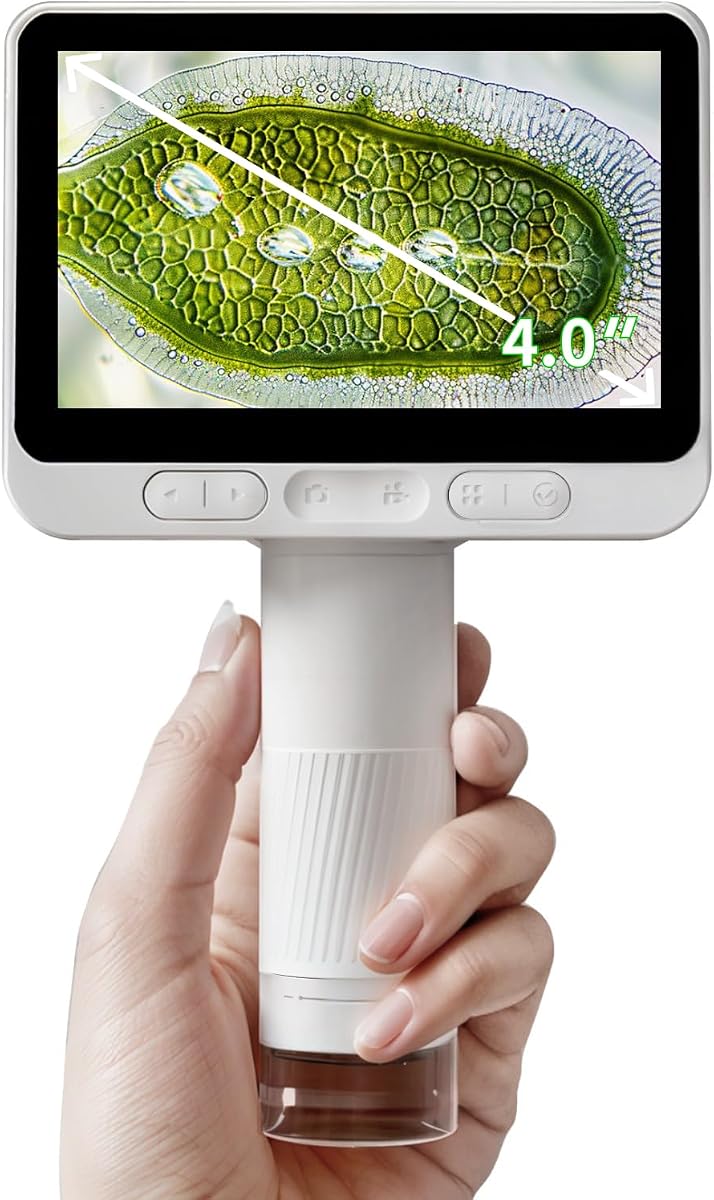
The BEAVERLAB Finder stands out with its impressive 4-inch display, providing vivid, large-scale views of specimens. This makes it exceptionally easy for children to observe details without squinting or relying on external devices.
We may earn a commission when you buy through this link, at no additional cost to you.
With magnification up to 1600x, it reveals fine textures like insect hairs or leaf veins clearly. The built-in hotspot enables quick sharing of discoveries with family, enhancing the interactive learning experience.
Battery usage is moderate due to the larger screen, but USB charging keeps it operational for long field sessions. The ergonomic design ensures comfort during extended use, promoting sustained exploration.
Ideal for visual learners, this model offers a premium viewing experience at a reasonable cost. It is an excellent choice for classrooms or families wanting an engaging, high-tech way to explore nature.
A 4-inch screen provides clear visibility of tiny specimens, reducing eye strain and enhancing educational engagement.
Built-in hotspot enables quick image uploads to phones, facilitating easy sharing and documentation of discoveries.
We may earn a commission when you buy through this link, at no additional cost to you.
Engineered for outdoor adventures, this microscope is rugged enough to withstand accidental drops and rough handling. Its BPA-free construction ensures safety, while the anti-glare diffuser improves visibility in varying light conditions.
We may earn a commission when you buy through this link, at no additional cost to you.
Built-in storage eliminates the need for an SD card, simplifying operation for young users. Photos and videos save automatically, allowing kids to compile digital journals of their insect observations effortlessly.
Charging is convenient via USB-C, and the 600mAh battery supports up to three hours of continuous use. A detachable neck strap adds convenience during hikes or nature excursions, keeping the device secure.
For active families, this model offers dependable performance. Its balance of toughness and functionality makes it ideal for adventurous children who explore frequently and need reliable equipment for documentation.
Shock-absorbent materials and compact design make it resilient for outdoor trips and daily exploration activities.
Integrated storage allows easy photo saving without extra cards, simplifying documentation and sharing.
We may earn a commission when you buy through this link, at no additional cost to you.
The Elikliv EM4K-AF delivers cutting-edge features like AI auto-focus and 4K video. These tools ensure consistent clarity during observation, reducing manual adjustments and making it easier to study moving specimens like insects.
We may earn a commission when you buy through this link, at no additional cost to you.
An 8-inch screen offers ample viewing space, while split-screen functions enable side-by-side comparisons. The built-in TOF sensor aids distance measurements, adding analytical depth to biological observations.
Its size and weight make it less portable, best suited for stationary use or lab settings. However, for users prioritizing image quality and automated functions, it provides unmatched precision and convenience.
Ideal for researchers or advanced hobbyists, this microscope combines automation with high-end display capabilities. It represents a powerful tool for detailed scientific work where accuracy is critical.
AI-driven auto-focus ensures sharp images instantly, simplifying observation of moving or delicate specimens.
View two samples simultaneously for precise comparison, enhancing analytical capabilities during research.
We may earn a commission when you buy through this link, at no additional cost to you.
This microscope supports nearly every device, making it highly versatile for schools and homes. Its wide-angle lens and long focal length options provide flexibility for different observation distances and specimen sizes.
We may earn a commission when you buy through this link, at no additional cost to you.
With 4K streaming via WiFi, users enjoy crisp, detailed images on tablets or computers. USB tethering ensures stable connections for extended recording sessions without draining mobile device batteries.
Setup may require downloading specific apps for optimal performance. Once configured, the streaming quality and compatibility stand out, offering excellent value for users seeking broad device support.
Perfect for tech-savvy educators, this model bridges hardware limitations with software versatility. It is a practical solution for sharing microscopic views across diverse devices effortlessly.
Compatible with iOS, Android, Windows, Mac, and even Linux, ensuring wide usability across different ecosystems.
Adjustable focal lengths and wide-angle settings accommodate various subjects, from distant insects to fine details.
We may earn a commission when you buy through this link, at no additional cost to you.
Featuring five lenses and magnification up to 5000x, this model delivers unmatched versatility for advanced users. It transitions seamlessly between biological slides, coin inspection, and macro photography with ease.
We may earn a commission when you buy through this link, at no additional cost to you.
The integrated metal stand reduces vibration, crucial for high-magnification clarity. HDMI output and professional measurement software expand its utility, making it suitable for both lab work and professional documentation.
Setup involves mounting and calibration, which may be daunting for casual users. However, for those requiring precision and extensive toolkits, this microscope offers professional features that justify the investment.
Ideal for educators and professionals, it bridges hobbyist and lab-grade performance. Its comprehensive features ensure it meets diverse needs, from teaching to detailed insect anatomical analysis.
Up to 5000x magnification allows deep exploration of cellular structures and minute surface textures.
Measurement software and HDMI support provide advanced analysis capabilities for research or educational use.
We may earn a commission when you buy through this link, at no additional cost to you.
Selecting the right digital microscope involves balancing features like magnification, portability, and connectivity. Consider your primary use case to find a model that suits your needs effectively.
Magnification determines how close you can see details. For insect anatomy, 200x to 1000x is generally sufficient to view structures like eyes and wings without overcomplicating the device.
Higher magnifications may require stable setups; prioritize models with adjustable options to match your exploration goals.
Models with built-in screens offer independent viewing, while WiFi/USB versions link to phones or PCs. Choose based on whether you prefer sharing data or quick handheld checks.
Ensure compatibility with your devices to avoid connectivity issues during fieldwork or classroom presentations.
Lightweight, handheld units are ideal for outdoor exploration. Look for rugged builds, neck straps, and ergonomic grips to enhance durability and comfort during long observation sessions.
A compact design ensures you can carry the microscope easily, enabling spontaneous discoveries without heavy equipment.
Extended battery life supports uninterrupted fieldwork. Rechargeable models with USB charging are practical for travel, allowing you to focus on observation rather than power management.
Check battery capacity to ensure it meets your typical usage duration, especially during outdoor expeditions.
Adjustable LEDs and diffusers prevent glare and ensure clarity. Optimal lighting is crucial for capturing sharp images, especially in low-light environments like forests.
Good optical quality reduces distortion, making details like insect textures more accurate and easier to study.
Built-in storage or SD card support allows saving photos and videos. This is essential for tracking progress, sharing findings, or creating educational portfolios.
Consider file transfer options like USB or cloud apps to easily back up and access your collected data.
User-friendly controls and intuitive interfaces reduce frustration. Look for models with simple focus mechanisms and straightforward menus, especially for children or casual users.
Ease of setup and operation encourages regular use, making scientific exploration more accessible and enjoyable.
Price varies significantly between basic handheld units and advanced systems. Determine which features are essential versus optional to find a model that fits your budget without sacrificing key capabilities.
Consider long-term value by checking warranty coverage and available support services for the chosen microscope.
To use your microscope effectively, start by ensuring the lens is clean and properly aligned. Place the device close enough to the specimen to maintain a clear focal point, adjusting distance as needed.
Use built-in lighting to enhance visibility. Adjust brightness settings depending on ambient light conditions to avoid overexposure or dark images during capture.
Store your microscope in a protective case when not in use. Keep the lens covered and avoid exposure to moisture or extreme temperatures to prolong its lifespan and maintain performance.
A range of 200x to 1000x is ideal for most insect studies. It provides clear views of external features like eyes and wings without requiring overly complex setups.
Yes, many models support WiFi or Bluetooth connectivity to pair with iOS and Android devices. Ensure the app is compatible with your phone's operating system for seamless use.
Use a soft, dry microfiber cloth to gently wipe the lens. Avoid harsh chemicals or water, which can damage coatings or cause scratches on the glass surface.
Most models come with pre-installed apps or support standard platforms like Windows and Mac. Always download the latest version to ensure compatibility and access all features.
Yes, many are designed specifically for kids with safety certifications and easy-to-use controls. Look for models with durable casings and simple focus mechanisms for younger users.
Photos and videos can be saved to internal storage, SD cards, or directly to connected devices. Use USB transfer or app exports to back up your findings efficiently.
The top picks provide options for every budget and skill level. Whether you prioritize affordability or advanced imaging capabilities, there is a suitable model for exploring the microscopic world.
Focus on features that align with your needs, such as portability, display options, and magnification range. Balancing these elements ensures a satisfying experience for both casual and serious observation.
Always verify current pricing and availability before purchasing. Deals may vary, and checking updates helps you secure the best value for your digital microscope investment.