
Calibrite Display 123
4.0Editor score
Easy 1 2 3 software workflow
USB C connection included
Supports up to 2 displays
This guide compares the top 10 colorimeters for monitor calibration to help you choose the right tool for accurate color in photo and video editing workflows.
Accurate color is essential for photographers and videographers. A colorimeter for monitor calibration ensures your screen displays true tones so your edits match the final output on other devices and prints.
We evaluated ten leading colorimeters based on sensor technology, software features, display compatibility, and ease of use. This list covers options for beginners, professionals, and hybrid creators working across multiple platforms and workflows.
Each pick highlights specific strengths like HDR support, camera profiling integration, or ambient light sensing. Prices and availability change frequently so check current listings before purchasing to ensure you get the best value today.
4.0Editor score
4.5Editor score

4.0Editor score
The following table compares all ten colorimeters side by side. Look at specs like sensor type, supported displays, and software included to find the best fit for your specific calibration needs.


The Calibrite Display 123 is a top pick for photographers who need reliable calibration without breaking the bank. With a solid rating and user friendly software it brings accurate color to standard LCD monitors easily.
We may earn a commission when you buy through this link, at no additional cost to you.
Its standout quality is the Easy 1 2 3 workflow which removes guesswork from the process. You connect via USB C and follow simple steps to adjust white point and contrast. The before and after check lets you verify the improvement immediately.
While it lacks advanced HDR capabilities this tool handles most photo editing needs well. The dual display support ensures consistency across a second monitor which is useful for reference windows during editing.
This colorimeter is ideal for hobbyists or professionals on a tight budget who prioritize ease of use. If you need accurate color for prints or web content without complex settings this device delivers great value.
The guided 1 2 3 process helps new users calibrate confidently without reading manuals.
Calibrating two screens ensures your reference display matches your primary editing monitor accurately.
We may earn a commission when you buy through this link, at no additional cost to you.
For professionals working with super bright or HDR monitors the Calibrite Display Plus HL is unmatched. It measures up to 10000 nits ensuring accurate calibration for Apple XDR and similar high luminance screens.
We may earn a commission when you buy through this link, at no additional cost to you.
The advanced HL sensor captures extreme brightness levels that standard meters miss. Combined with PROFILER software you gain precise control over white point gamma and contrast. Video editors also benefit from Rec 709 and BT 1886 curve options.
The main trade off is the cost and the need for a USB adapter on some systems. However for users needing true HDR accuracy the investment pays off in consistent grading and reliable client deliveries.
This tool is best for serious colorists video producers or anyone using premium displays. If your workflow demands high fidelity in bright highlights this colorimeter provides the necessary precision and tools.
Measures up to 10000 nits for accurate calibration of HDR capable monitors and projectors.
PROFILER software offers advanced modes and shared presets for team workflows and standards.
We may earn a commission when you buy through this link, at no additional cost to you.
The datacolor Spyder Monitor Calibrator is an excellent choice for creators who want speed and modern features. It calibrates in about 90 seconds and includes tools to simulate how your images appear on different devices.
We may earn a commission when you buy through this link, at no additional cost to you.
A key strength is the ambient light sensor which adjusts brightness and contrast based on room conditions. This ensures your screen stays consistent even if lighting changes during long editing sessions. It also supports today's wide range of displays including OLED and XDR.
Some users may find the DevicePreview Beta feature still evolving which is a minor concern. However the core calibration capabilities remain strong and the customizable settings give pros enough flexibility to fine tune results.
This device is ideal for hybrid shooters or anyone working with multiple display types. If you need fast reliable calibration that adapts to your environment this Spyder offers a balanced solution.
DevicePreview Beta feature simulates how photos look on other devices from your calibrated screen.
Ambient light sensor measures room conditions and warns you to recalibrate as needed.
We may earn a commission when you buy through this link, at no additional cost to you.
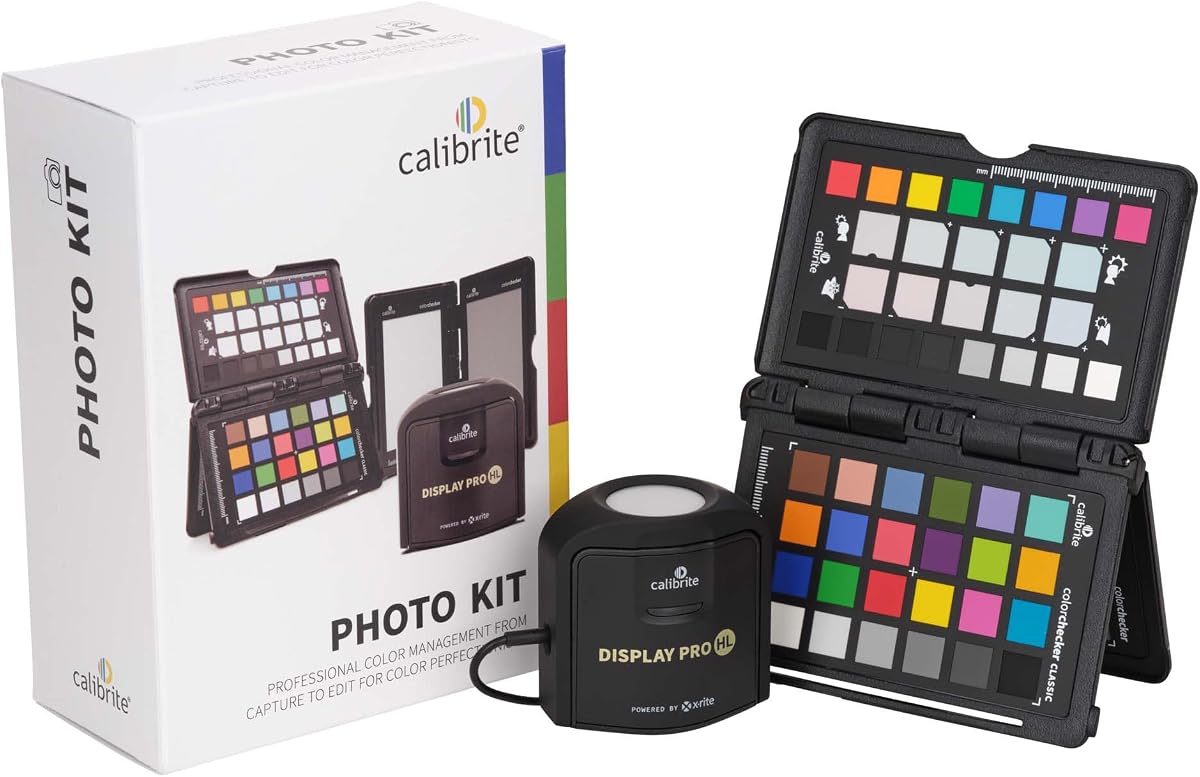
The Calibrite Photo Kit combines monitor calibration with camera profiling in one package. With the Display Pro HL sensor and ColorChecker Passport Photo 2 it offers a complete solution for photographers who want consistency from capture to print.
We may earn a commission when you buy through this link, at no additional cost to you.
You can create custom camera profiles for RAW workflows which reduces guesswork during editing. The display ensures your monitor matches those profiles accurately so edits remain reliable across sessions and locations. This integration is a major advantage for hybrid pros.
While the kit is a larger investment than standalone tools it saves money compared to buying separately. The only minor downside is learning to use both the monitor meter and the camera target efficiently together.
This kit is perfect for photographers who want end to end color accuracy. If you value consistency across your camera and screen this all in one solution delivers professional results.
Passport Photo 2 enables custom camera profiles for RAW workflows and consistent white balance.
Combined kit reduces guesswork and maintains reliable results across sessions and locations.
We may earn a commission when you buy through this link, at no additional cost to you.
The Calibrite Creator Kit is designed for content creators who shoot both photos and video. It includes the Display 123 monitor colorimeter and the ColorChecker Passport Video 2 which helps maintain color standards across cameras and editing software.
We may earn a commission when you buy through this link, at no additional cost to you.
On set you can verify exposure and white balance using the video target ensuring consistent footage in mixed lighting. Then use the Display 123 to calibrate your editing screen so what you see matches delivery specs. This end to end support is unique.
While still photographers might not need the video target the kit is ideal for hybrid shooters. The only trade off is the larger case size but the convenience of one system for all media is worth it.
Choose this kit if you need reliable color across multiple cameras and platforms. It reduces trial and error and supports professional results from capture through post-production.
Passport Video 2 helps set accurate white point and match multiple cameras on set.
Display 123 provides easy workflow for trusting on-screen color during editing and grading.
We may earn a commission when you buy through this link, at no additional cost to you.
The Calibrite ColorChecker Display Pro is a professional tool known for its optical design and repeatability. It works with ccProfiler or i1Profiler software giving you flexibility in how you manage color across your studio.
We may earn a commission when you buy through this link, at no additional cost to you.
Its rotatable diffuser arm serves multiple purposes acting as a stand projector cover or ambient light cover. The tripod mount is useful for larger venue profiling where positioning matters. This versatility keeps it relevant for advanced users.
The device is heavier and older than newer compact meters which may be less convenient for travel. But for fixed workstations where consistency is key its stability and industry support are valuable assets.
Select this meter if you need high repeatability and integration with existing X-Rite workflows. It remains a trusted choice for studios that value legacy compatibility.
Optical design allows high repeatability on same displays and across different types.
Integrated tripod mount and rotatable arm enable projector profiling and cover use.
We may earn a commission when you buy through this link, at no additional cost to you.
The Datacolor Spyder5PRO is designed for serious photographers and designers who need reliable calibration. It takes about five minutes to complete and includes room light monitoring to optimize brightness for shadow detail.
We may earn a commission when you buy through this link, at no additional cost to you.
One of its best features is the Before and After evaluation which lets you compare your own photos to see changes. The Display Analysis feature helps you evaluate monitor performance quickly. This practical approach reduces wasted ink and paper.
As an older model it may not support the newest OLED or mini LED panels natively. However for standard LCD displays it still delivers accurate results and is a cost-effective choice for those who need solid fundamentals.
This tool is a good pick for photographers focused on print accuracy and simple workflows. If you need proven calibration without extra complexity this meter gets the job done.
Determines optimal monitor brightness so you see fine shadow detail and highlights.
Evaluate calibration results using your own photographs to focus on details important to you.
We may earn a commission when you buy through this link, at no additional cost to you.
The ASUS ProArt CaliContrO MCA02 is a 3-in-1 tool combining colorimeter display OSD control and ASUS Dial features. It measures up to 10000 nits for HDR calibration and integrates with ASUS ProArt monitors for seamless adjustment.
We may earn a commission when you buy through this link, at no additional cost to you.
The built-in ASUS Dial allows customizable shortcuts for creator software. This hardware control can speed up workflows for users who rely on ProArt displays. The reversible USB-C connection also simplifies setup and reduces cable clutter.
However this tool has a low user rating which suggests reliability or software compatibility issues. It works best if you already own ASUS ProArt hardware and want deep integration with that ecosystem.
Choose this only if you are invested in the ProArt ecosystem. For general users the limited software support may make other options more practical.
Integrated colorimeter allows both Hardware and Software Calibration via ASUS exclusive tool.
Integrate ASUS Dial to provide customize shortcuts for easy precise control of creator software.
We may earn a commission when you buy through this link, at no additional cost to you.
The Datacolor Spyder4Pro remains a reliable budget friendly option for standard calibration. Its fourth generation sensor uses double-shielded color filters for improved accuracy and stability compared to earlier versions.
We may earn a commission when you buy through this link, at no additional cost to you.
The ReCAL feature allows you to recalibrate quickly to compensate for aging monitors. This is handy for long-term consistency. The single sensor also calibrates multiple displays which is useful for multi-monitor setups.
Because it is an older model it may lack native support for newer display technologies. However for standard LCD or LED monitors it delivers stable results and is a great value for those on a strict budget.
This meter is ideal for users who need dependable calibration without advanced HDR features. If you want accuracy and stability at a lower cost this Spyder is worth considering.
Fourth-generation Spyders have double-shielded color filters for even closer match to CIE color standards.
The ReCAL feature makes it quick and easy to recalibrate your display to compensate for changes over time.
We may earn a commission when you buy through this link, at no additional cost to you.
The Datacolor Spyder X Pro is ideal for first-time users who want accurate color without complexity. It features a lens-based color engine for higher accuracy and takes just a minute or two to calibrate.
We may earn a commission when you buy through this link, at no additional cost to you.
The wizard workflow includes 12 predefined targets making it simple to get started. SpyderProof provides before-and-after evaluation so you can see the difference using your own images. Room-light monitoring also adjusts brightness automatically.
While it lacks camera profiling or advanced video features it covers all basics well. The interface is intuitive so you won't need to learn a color expert to use it effectively.
Choose this meter if you need straightforward accurate calibration for editing work. It offers great value for photographers or designers new to color management.
Features quick and easy single-click calibration and wizard workflow with 12 predefined targets.
SpyderProof functionality provides before-and-after evaluation of your display and allows you to see the difference.
We may earn a commission when you buy through this link, at no additional cost to you.
Selecting the right colorimeter depends on your specific workflow display types and budget. Consider these factors to ensure you get the tools needed for accurate color management.
Modern monitors include OLED Mini LED and high brightness HDR panels. Ensure the colorimeter supports your specific screen type as standard sensors may struggle with extreme brightness or deep blacks. Look for devices rated for your nits level and panel tech.
Always verify the meter matches your display technology before purchasing.
A high-quality sensor ensures consistent readings across time and different devices. Check the luminance range and spectral matching accuracy for your needs. Advanced HL sensors can measure up to 10000 nits for HDR workflows.
Choose a sensor that covers the full brightness range of your monitors.
Software drives how you apply and manage color profiles. Some tools offer preset workflows while others provide advanced customization like white point and gamma control. Look for validation tools and team preset sharing if you work collaboratively.
Select software that matches your skill level and project complexity.
Room lighting changes throughout the day and affects how you perceive on-screen colors. A colorimeter with ambient light sensing adjusts brightness and contrast accordingly. This ensures consistent editing conditions regardless of external factors.
Prioritize models with built-in light sensors if your workspace varies.
Consider if you need camera profiling alongside monitor calibration. Some kits include color targets like the ColorChecker Passport for consistent capture to edit workflows. This reduces guesswork across devices and locations.
Choose a kit if you want end-to-end color control.
Many professionals use two or more displays for reference and editing. Ensure the tool can profile multiple screens so color remains consistent across your workspace. This is critical for accurate grading and image output.
Check for dual or multi-monitor calibration features if you have several screens.
A guided workflow helps beginners avoid errors while pros may want advanced controls. Look for features like Before and After views and auto-recommendations. Simplicity saves time and increases calibration frequency.
Pick a device with a workflow that fits your expertise.
Colorimeters vary widely in price and durability. Higher-end tools often offer better repeatability and advanced features. Consider how often you need to recalibrate and the longevity of the sensor.
Balance cost against the precision and features you truly need.
Before first use, allow your monitor to warm up for at least thirty minutes. Place the colorimeter on the screen according to the software prompts ensuring no bright light hits the sensor. Follow the guided steps to adjust settings and generate a profile.
After calibration, enable the ICC profile in your operating system settings to apply the changes. Use software like the Before and After view to verify color consistency. Regularly recalibrate every few weeks to account for monitor aging.
Store your colorimeter in the provided pouch or case when not in use. Keep the sensor clean and free of dust using a soft dry cloth. Avoid exposure to extreme temperatures or direct sunlight to maintain measurement accuracy.
Monitors shift color over time which leads to edits that look different on other screens or prints. A colorimeter measures your display and creates a profile so colors match accurately. This consistency saves time and reduces costly print or client revisions.
For professional work calibrate every two to four weeks. Consumer displays may be stable for a month but regular checks ensure consistency. If your workspace lighting changes often consider calibrating more frequently.
A colorimeter measures color using filters and is faster and simpler. A spectrophotometer uses a prism to measure light wavelengths and is more precise for printing. For screen work a colorimeter is usually sufficient and faster.
No only models with high luminance sensors support HDR displays up to 10000 nits. Standard tools may struggle with super bright screens. Check the product specs to ensure HDR compatibility if needed.
Yes many tools support multiple display calibration. You simply move the device to each screen during the process. Ensure the software allows multi-monitor profiling for consistent colors across your workspace.
Yes changes in room lighting can alter how your display appears. Some colorimeters measure ambient light to recommend brightness adjustments. For best results calibrate in a stable lighting environment.
Yes some kits include targets like ColorChecker Passport for camera profiling alongside monitor calibration. This provides a complete workflow from capture to final output. It ensures accurate white balance and color from start to finish.
The Calibrite Display 123 offers the best entry value with simple workflow and dual support. It provides accurate color for standard displays without the advanced cost. It is ideal for beginners and hobbyists.
We reviewed ten top colorimeters ranging from budget friendly models to advanced professional kits. The Calibrite Display 123 offers affordability while the Display Plus HL handles HDR. The Spyder Monitor Calibrator provides modern features for hybrid shooters.
Consider your display types budget and software needs when choosing. Professionals working with HDR or multiple cameras should look at kits with advanced sensors and integration. Casual users may prefer tools with simple wizards and quick calibration.
Prices and availability change frequently so check current listings before purchasing. Accurate color starts with the right tools so choose one that fits your workflow today.