
USB Logic Analyzer 24MHz 8 Channel Debug Tool for Arduino ARM FPGA
4.5Editor score
24MHz sampling rate per channel
Compatible with Saleae software
8 digital channels available
This guide compares the top 10 logic analyzers for electronics projects, covering sampling rates, channel counts, protocol support, and software compatibility
Logic analyzers are essential tools for debugging digital circuits and understanding signal behavior in modern electronics projects. They capture multiple digital signals simultaneously, allowing engineers and hobbyists to visualize timing relationships and protocol exchanges with precision and clarity.
We evaluated ten leading logic analyzers based on sampling rates, channel counts, protocol decoding capabilities, and software compatibility. Each product was assessed for its suitability across different project scales, from simple Arduino prototypes to complex embedded system designs requiring high-speed analysis.
Every pick highlights specific strengths like portability, affordability, or advanced features to match diverse user needs. Prices and availability may change frequently, so always verify current details before purchasing to ensure you get the best value for your specific engineering requirements today.
4.5Editor score
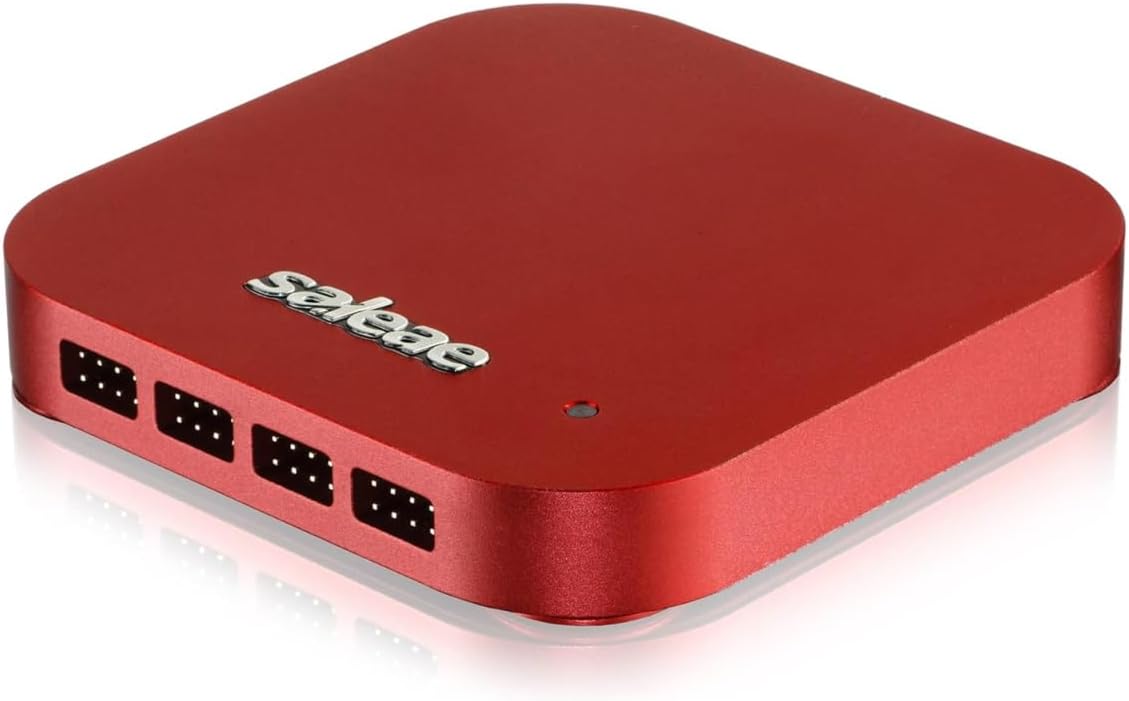
4.8Editor score

4.5Editor score
This table provides a side-by-side comparison of all ten selected logic analyzers, highlighting key specifications like sampling rate, channel count, and unique features to help you quickly identify the best fit for your electronics debugging needs.



The Saleae Logic Pro 16 stands out as a top-tier solution for serious electronics developers needing precise digital signal analysis. With a 4.8 rating, it delivers exceptional performance through its high-speed sampling and comprehensive protocol decoding capabilities.
We may earn a commission when you buy through this link, at no additional cost to you.
Its standout feature is the ability to capture digital signals at up to 500 MS/s while simultaneously handling 16 digital or analog inputs. This flexibility allows users to debug complex embedded systems where timing and voltage levels matter critically for system stability and function.
While the device demands substantial PC memory for its billion-sample buffer, the trade-off is negligible for professionals working on intricate projects. The software remains stable even during long captures, ensuring that no data is lost during extended monitoring sessions.
This analyzer is ideal for engineers and advanced hobbyists who prioritize accuracy over cost. Its reliability and ease of use make it a valuable asset for any workshop dedicated to high-quality embedded system development and debugging tasks.
The 500 MS/s digital sampling rate ensures that even the fastest transitions are captured without aliasing, providing a true representation of signal integrity.
Built-in decoders for over 23 protocols save time by automatically translating raw signals into readable data formats like SPI, I2C, and UART.
We may earn a commission when you buy through this link, at no additional cost to you.
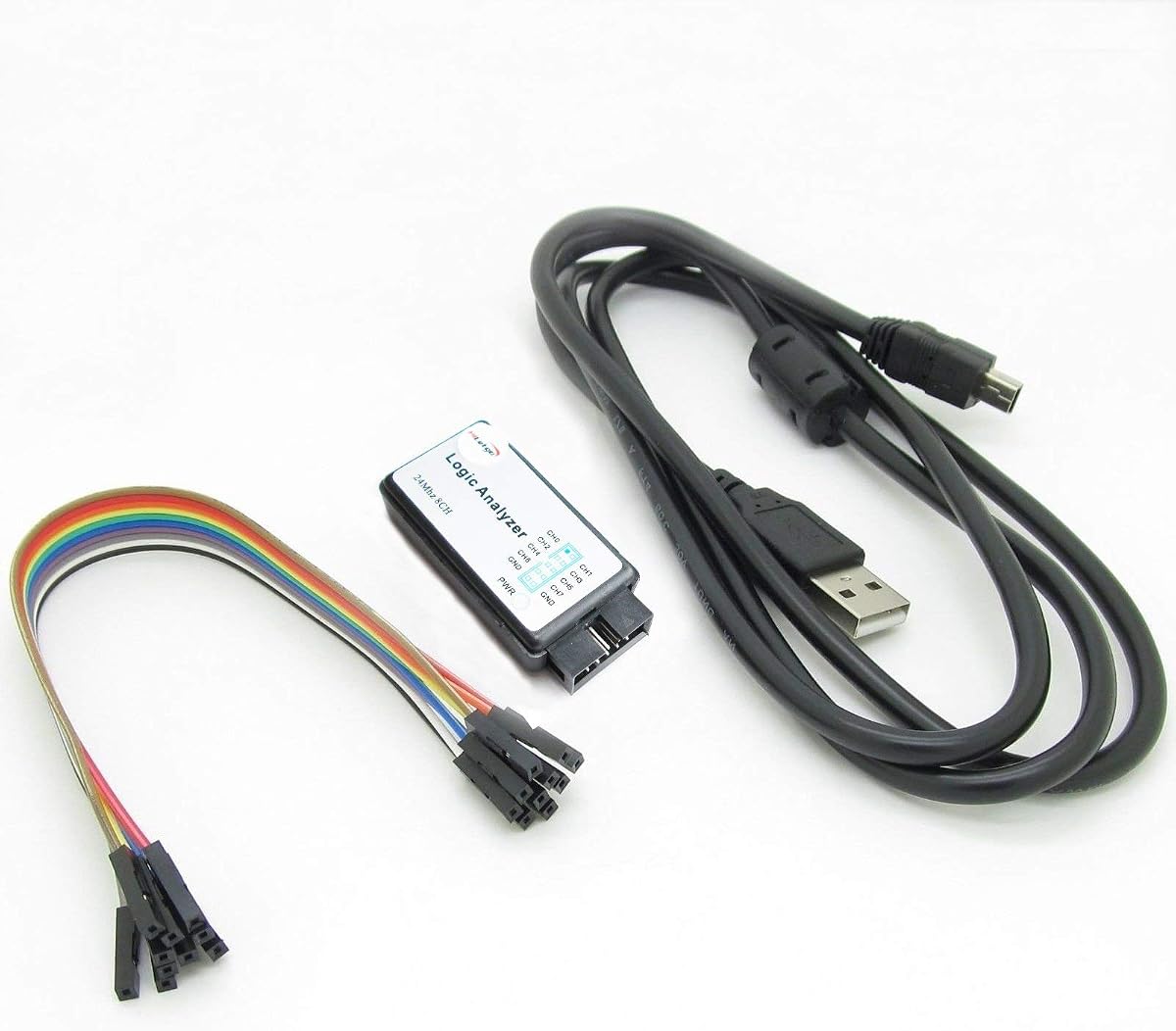
This USB Logic Analyzer offers an accessible entry point for hobbyists and students needing reliable digital signal observation without a large investment. Rated 4.5 stars, it provides essential debugging tools for common microcontroller communication protocols effectively.
We may earn a commission when you buy through this link, at no additional cost to you.
Despite its low cost, it supports a 24MHz sampling rate which is ample for UART, I2C, and SPI tasks found in Arduino and Raspberry Pi projects. Compatibility with Saleae Logic software enhances its utility by leveraging a familiar interface for waveform analysis.
The trade-off lies in its slower speed compared to professional units, making it less suitable for high-frequency RF or high-speed serial applications. However, for learning and basic prototyping, its performance remains robust and dependable for daily tasks.
Budget-conscious builders will appreciate how this tool simplifies debugging without requiring expensive hardware. It is an excellent first step for those entering electronics engineering who want to visualize signals clearly before upgrading to more advanced equipment.
By supporting open-source Saleae Logic software, users gain access to advanced protocol decoding without needing proprietary drivers or expensive licensing fees.
Adjustable input thresholds allow users to tailor the analyzer to different logic levels, ensuring accurate readings across various voltage standards.
We may earn a commission when you buy through this link, at no additional cost to you.
The Analog Discovery 3 is a comprehensive instrument that combines a logic analyzer with an oscilloscope, waveform generator, and power supply. With a 4.5 rating, it serves as a portable lab bench for mixed-signal analysis and testing requirements.
We may earn a commission when you buy through this link, at no additional cost to you.
Its ability to handle 16 digital IO channels alongside two differential analog channels makes it uniquely versatile for projects involving both digital logic and analog signal integrity. The integrated power supplies further reduce the need for extra external equipment.
While the software is feature-rich, it may require some time to master compared to simpler dedicated analyzers. However, the flexibility it offers in generating signals while analyzing responses is a significant advantage for iterative circuit development and validation.
Professionals and educators seeking a unified tool for teaching or testing mixed-signal designs will find immense value here. It consolidates multiple bench instruments into one compact unit, saving space and budget while expanding testing capabilities significantly.
Having an oscilloscope and logic analyzer in one device allows simultaneous viewing of analog and digital behavior for complete system verification.
The programmable power supplies enable precise voltage testing, helping users debug power rails without needing separate lab power sources.
We may earn a commission when you buy through this link, at no additional cost to you.
The Saleae Logic Pro 8 delivers the same high-speed performance as its larger sibling but in a smaller form factor. Rated 4.8 stars, it captures digital signals at up to 500 MS/s making it perfect for precise timing analysis in complex projects.
We may earn a commission when you buy through this link, at no additional cost to you.
While it has only eight channels, this is often sufficient for most embedded tasks including UART SPI and I2C debugging. The ability to handle mixed digital and analog inputs adds value for users needing to observe both logic states and voltage transitions.
Users should note that the high speed requires significant USB bandwidth and PC memory which might limit use on older computers. Despite this, the software remains stable and efficient ensuring consistent results during long monitoring sessions without signal loss.
This device suits designers who need portability without sacrificing performance. It is an excellent choice for field engineers or anyone who values a reliable compact tool for troubleshooting modern digital electronics efficiently on the go.
The compact design fits easily into a laptop bag without sacrificing the high sampling rates expected from professional testing equipment.
Digital and analog inputs share the same interface allowing flexible configuration for diverse testing needs within a single unit.
We may earn a commission when you buy through this link, at no additional cost to you.
The LA1010 offers a strong balance between channel count and affordability making it a popular choice for students and hobbyists. With a 4.5 rating it provides 16 input channels and a 100MHz sampling rate for accurate digital signal observation.
We may earn a commission when you buy through this link, at no additional cost to you.
Its KingstVIS software is straightforward and supports major operating systems including Windows macOS and Linux. This compatibility ensures that users can deploy it quickly without complex driver installations or configuration hurdles during setup.
While the software interface is less polished than premium options it effectively decodes standard protocols. The hardware captures clear waveforms that are sufficient for most debugging tasks involving microcontrollers and digital communication modules.
This unit is recommended for those needing more channels on a budget without sacrificing speed. It delivers reliable performance for classroom use or DIY electronics where cost efficiency is a priority over advanced waveform analysis features.
Automatic driver installation on Windows Mac and Linux removes barriers to entry making it accessible for diverse user environments.
Built-in decoders for common protocols streamline analysis by presenting data in human readable formats instead of raw binary.
We may earn a commission when you buy through this link, at no additional cost to you.
The DSLogic Plus is engineered for high-speed digital analysis with a 400MHz sampling rate and 256Mbits of onboard memory. Its 4.6 rating reflects strong performance for professionals needing deep buffer capabilities during intensive debugging sessions.
We may earn a commission when you buy through this link, at no additional cost to you.
It offers dual stream and buffer modes allowing users to choose between long-duration capture or maximum speed. This flexibility is crucial for catching intermittent glitches or analyzing continuous data streams without overwhelming PC memory resources.
The open-source DSView software community actively improves protocol support and features. While setup may require more effort than commercial alternatives the transparency and customization potential appeal to technically advanced users who value control over their tools.
This analyzer suits engineers tackling high-speed communication protocols or long duration monitoring. Its robust aluminum case ensures durability in demanding environments making it a reliable tool for industrial or laboratory applications requiring consistent high performance.
Stream mode captures long durations while buffer mode prioritizes speed enabling versatile approaches to different diagnostic challenges.
Community contributions expand protocol support and fix bugs rapidly keeping the tool current with evolving electronic standards.
We may earn a commission when you buy through this link, at no additional cost to you.
The LONELY BINARY kit includes essential breakout boards and connectors designed to simplify breadboard prototyping. With a 4.2 rating it provides a straightforward setup for capturing signals on 8 channels without needing additional custom wiring or adapters.
We may earn a commission when you buy through this link, at no additional cost to you.
Its dual USB support ensures compatibility with both older computers and modern laptops. The included storage case keeps all clips and adapters organized making it a convenient choice for students or professionals moving between workstations frequently.
While the 24MHz speed is adequate for basic UART and SPI debugging it may struggle with high-speed synchronous data transfer. However the included tools reduce setup time significantly which is valuable for quick iterative testing sessions.
This kit is ideal for beginners who need a complete ready-to-use package. It offers excellent convenience and organization making it a strong option for educational settings where ease of use and portability are paramount for learning.
Everything needed to start testing is included in the box reducing wait times for additional cables or breakout boards.
The compact storage container ensures all small components remain organized protecting them from damage during transport.
We may earn a commission when you buy through this link, at no additional cost to you.
The HiLetgo USB Logic Analyzer is a simple plug and play device for basic signal observation. Its 4.5 rating confirms that it offers reliable 24MHz sampling for 8 channels making it a consistent performer for hobbyist level debugging tasks.
We may earn a commission when you buy through this link, at no additional cost to you.
The inclusion of an EMI ferrite ring on the cable helps reduce noise interference which is beneficial for capturing cleaner signals in electrically noisy environments. This small detail improves signal integrity without requiring extra shielding from the user.
Input voltage tolerance extends to 5.5V making it safe for standard 5V microcontrollers without risk of damage. While it lacks advanced protocol decoding features it remains a solid tool for checking logic levels and timing visually.
This device is best suited for beginners or quick checks on standard digital circuits. Its simplicity ensures easy deployment in classrooms or home labs where complex features are not necessary for basic troubleshooting needs.
The ferrite ring minimizes noise pickup on the USB line improving waveform clarity during sensitive signal capture operations.
Support for 5V input ensures compatibility with standard logic families without requiring external voltage dividers.
We may earn a commission when you buy through this link, at no additional cost to you.
The Saleae Logic 8 brings the trusted Saleae experience to a more accessible 8-channel device. With a 4.5 rating it provides 100 MS/s digital sampling and protocol decoding that makes debugging intuitive for students and entry-level engineers.
We may earn a commission when you buy through this link, at no additional cost to you.
Its USB 2.0 connection makes it compatible with older laptops without requiring specific ports or adapters. While this limits maximum speed compared to newer models it ensures widespread usability across different workstations and legacy systems effectively.
The software supports over 23 protocols providing a quick visual interpretation of complex communications. This feature significantly reduces the time needed to decode raw data into meaningful information during the development process.
This analyzer is an excellent entry point for those starting with embedded systems. It balances cost and capability well offering enough features to learn on while providing reliable performance for small to medium sized projects.
Over 23 built-in decoders help users quickly understand data flows without manual binary interpretation.
Compact size and bus-powered operation allow testing anywhere without bulky power supplies or large hardware.
We may earn a commission when you buy through this link, at no additional cost to you.
This listing highlights the DSLogic Plus with a massive 16G sample depth capability for extended analysis. With a 4.7 rating it allows users to capture extremely long sequences or high speed bursts without missing critical data points.
We may earn a commission when you buy through this link, at no additional cost to you.
The high 400MHz speed ensures fast transitions are captured accurately. Combined with adjustable thresholds it adapts to various voltage standards making it versatile for mixed signal designs requiring precise voltage level detection.
Support for Windows macOS and Linux ensures flexibility across different development environments. This broad compatibility helps teams maintain consistent workflows regardless of operating system preferences or organizational standards.
Ideal for professionals needing deep trace capabilities this analyzer is a powerful diagnostic tool. It handles complex multi-day monitoring tasks easily making it suitable for industrial applications where reliability and depth are paramount.
The 16G sample depth allows capturing events that happen hours apart without losing context or triggering data.
Running on Windows Mac and Linux ensures integration into diverse tech stacks without hardware limitations.
We may earn a commission when you buy through this link, at no additional cost to you.
Selecting the right logic analyzer requires balancing several technical factors to ensure the tool meets your specific project demands without unnecessary expense or complexity.
The sampling rate determines how many signal samples per second the device can capture. Higher rates like 400MHz or 500MS/s are essential for high-speed protocols or precise edge detection. Slower rates around 24MHz may suffice for basic UART or I2C debugging.
Look for a sampling rate that is at least ten times your fastest signal frequency to ensure accurate reconstruction and timing analysis.
Channel count defines how many digital signals can be observed simultaneously. Eight channels work well for standard microcontrollers but sixteen or more are needed for complex buses or simultaneous data streams.
Select a device with enough channels to cover your widest bus without needing external multiplexers or extra equipment.
Built-in decoders translate raw binary signals into human-readable formats. This saves time and reduces human error when analyzing SPI I2C UART or CAN protocols.
Ensure your chosen unit supports the specific protocols required by your project to streamline the debugging workflow effectively.
Cross-platform support ensures the device works with your current operating system. Open-source software provides community-driven updates while proprietary software offers polished features and stability.
Choose software that integrates smoothly with your existing tools to avoid workflow interruptions or driver issues.
Onboard memory determines how long you can capture data before transferring it to a computer. More memory allows longer durations or higher sampling rates for extended monitoring.
Prioritize units with significant memory if you need to capture intermittent glitches or long-duration signals.
Voltage tolerance ensures the analyzer can safely measure different logic levels without damage. Standard devices support 3.3V and 5V logic but advanced units offer wider ranges.
Check input voltage limits to protect your device when working with diverse logic families or older hardware.
Modern analyzers support USB-C for faster data transfer and power delivery. Older USB-A ports may be necessary for compatibility with legacy computers.
Opt for dual USB support if you need to connect to both modern laptops and older PCs regularly.
Portability is crucial for field work or multi-station labs. Compact units often save space and can be carried in a laptop bag easily.
Select a lightweight model with durable casing if you need to move between workstations or on-site frequently.
Connect the analyzer to your circuit using the provided clips ensuring ground is connected before attaching probes to avoid shorts. Power the device via USB to ensure stable operation during capture.
Configure sampling rate and threshold levels in software to match your signal speed and voltage. Adjust triggers to start capturing only when specific conditions are met to save memory and time.
Store the device in a dry cool place with accessories organized in cases to prevent cable damage. Avoid bending probes sharply to maintain connection integrity for reliable future testing.
An oscilloscope captures analog voltage changes over time providing detailed waveforms. A logic analyzer focuses on digital states capturing timing relationships between multiple signals to decode protocol data.
Eight channels are typically sufficient for standard Arduino projects as they cover UART SPI and I2C buses. If you have many sensors or custom parallel buses you may need sixteen channels for simultaneous observation.
Yes most modern logic analyzers support macOS alongside Windows and Linux. Always check the specific driver requirements and software compatibility before purchasing to ensure seamless integration with your system.
For SPI protocols a sampling rate of at least ten times the clock speed is recommended. A 24MHz analyzer works well for most low-speed SPI tasks while faster rates ensure precise edge detection.
Most modern analyzers are plug-and-play requiring minimal configuration. Drivers install automatically and software guides you through basic settings making setup straightforward even for beginners without extensive technical experience.
Many devices come with proprietary software or support open-source tools like Saleae Logic. You should verify software features and licensing to ensure they meet your project requirements and workflow preferences.
The top three picks cover different needs ranging from budget-friendly entry-level options to premium high-performance tools. Each unit offers distinct advantages depending on whether you prioritize cost speed or comprehensive analysis features.
Prioritize sampling rate and channel count to ensure your analyzer can handle the protocols used in your projects. Software support and ease of use also play major roles in long-term productivity and efficiency.
Always check current availability and verify specifications before purchasing to ensure the best value. Prices and features vary across listings so confirm compatibility with your specific project requirements before committing to a purchase.