
ASUS Dual GeForce RTX 5060 Ti
4.7Editor score
Cost Effective Performance
16GB VRAM Capacity
Compact Cooling Solution
Discover the top GPUs for Davinci Resolve in October 2026. Our expert guide compares performance, VRAM, and features to help you choose the best card for your
Choosing the right GPU for Davinci Resolve is critical for smooth editing and efficient rendering. A powerful card ensures your timeline plays back without stuttering and speeds up color grading tasks significantly.
We compared ten top-tier graphics cards focusing on VRAM capacity, architecture efficiency, and specific Resolve features like Neural Engine support. This list covers everything from budget options to workstation-grade power.
Each pick highlights key strengths and real-world performance notes to help you decide. Prices fluctuate frequently so always verify current availability before making your final purchase decision today.
4.7Editor score
4.9Editor score

4.3Editor score
This side-by-side comparison highlights the essential specs of each graphics card to help you visualize differences in memory, architecture, and physical design for your specific build needs.



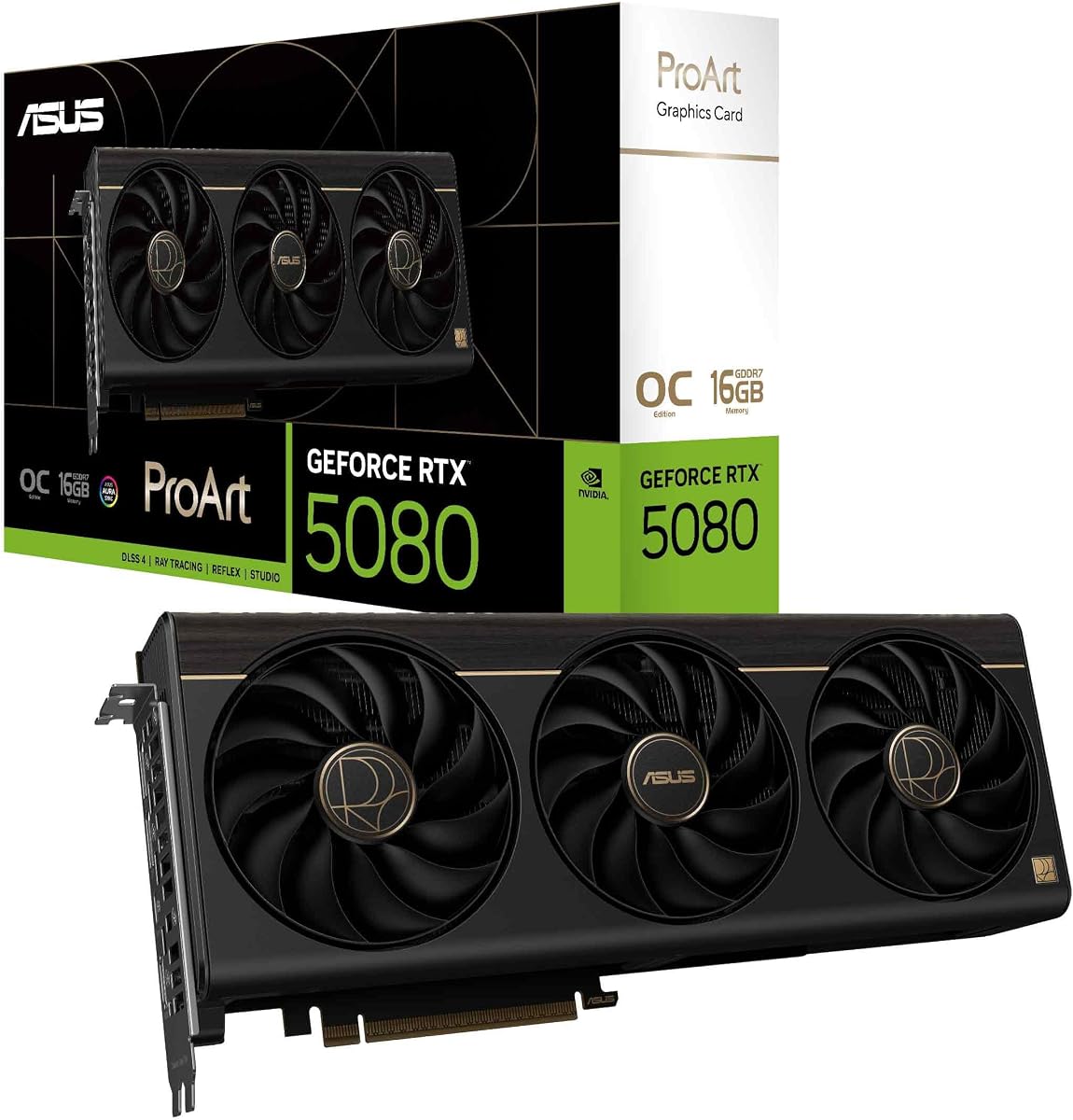
The ASUS ProArt RTX 5080 stands out as the top choice for professional editors. With a near perfect rating of 4.9 it delivers incredible stability for complex color grading tasks and high resolution timelines.
We may earn a commission when you buy through this link, at no additional cost to you.
Its Blackwell architecture ensures you get the latest AI features for noise reduction and speed warp. The 16GB of GDDR7 memory handles 4K and even 8K footage without bottlenecks ensuring smooth playback.
While the price is steep compared to gaming cards the professional focus justifies the cost. The thermal design keeps noise low even under load which is crucial for broadcast environments.
If you need a reliable workstation card that balances raw power with professional calibration tools this is the one to buy. It simplifies high end editing workflows significantly.
The MaxContact heatsink and phase change pads ensure the GPU stays cool during long rendering sessions. This prevents thermal throttling and maintains consistent performance over time.
An integrated USB Type C port allows for direct connection to high speed storage or calibration tools. This versatility streamlines your editing workflow without extra adapters.
We may earn a commission when you buy through this link, at no additional cost to you.
The GIGABYTE RTX 5080 brings high end power at a slightly more accessible price. Its 4.6 rating reflects strong performance in both gaming and creative applications like Davinci Resolve.
We may earn a commission when you buy through this link, at no additional cost to you.
The WINDFORCE cooling system keeps temperatures in check during heavy renders. With 16GB of GDDR7 memory you can work with multiple layers and effects without worrying about memory limits.
This card is ideal for hybrid users who game and edit. While it lacks some pro specific drivers the raw compute power handles color grading and effects exceptionally well.
For those seeking maximum performance without paying premium workstation prices this card offers a compelling balance. It is a strong contender for modern editing builds.
The WINDFORCE system uses multiple fans and heat pipes to dissipate heat efficiently. This keeps the card quiet and cool even when processing 8K video files.
Powered by Blackwell architecture it supports the latest DLSS 4 and ray tracing features. These technologies enhance visual fidelity and speed up preview rendering in Resolve.
We may earn a commission when you buy through this link, at no additional cost to you.
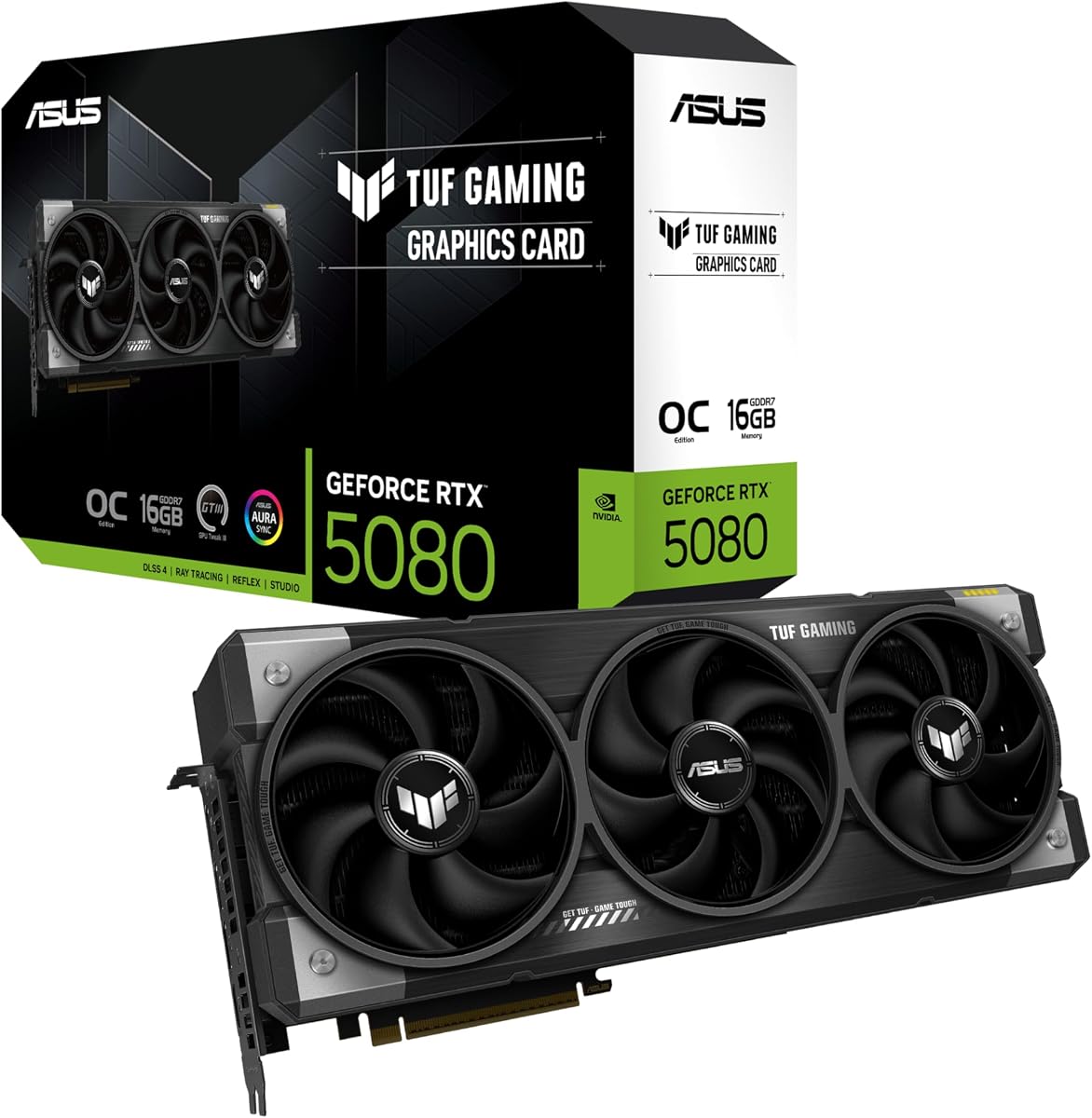
The ASUS TUF Gaming RTX 5080 is built to last with military grade components. Its 4.6 rating highlights its reliability for users who need consistent performance over years of use.
We may earn a commission when you buy through this link, at no additional cost to you.
Features like the protective PCB coating guard against moisture and dust. The phase change thermal pad ensures better heat transfer than traditional paste keeping the card cool under load.
This card is perfect for studio environments where uptime is critical. The robust build quality means less risk of failure during critical project deadlines.
If you want peace of mind regarding hardware longevity this card is a smart investment. It delivers the power needed for 4K grading with extra durability.
Military grade components and automated manufacturing ensure higher reliability. This reduces the risk of hardware failure during intensive rendering tasks.
Phase change pads outlast traditional paste for graphics cards under heavy loads. This ensures optimal temperatures during long rendering sessions.
We may earn a commission when you buy through this link, at no additional cost to you.
The ASUS Dual RTX 5060 Ti offers impressive value with 16GB of VRAM at a lower price. Its 4.7 rating confirms it is a solid choice for entry level and intermediate editors.
We may earn a commission when you buy through this link, at no additional cost to you.
It handles 4K timelines smoothly and benefits from Blackwell efficiency. The Dual BIOS lets you switch between performance and quiet modes depending on your current task needs.
This card is ideal for those upgrading from older hardware without breaking the bank. It provides enough power for most color grading tasks and standard editing workflows.
For budget conscious builders this card delivers the memory capacity needed for complex effects. It is a practical choice for learning and professional work alike.
Dual BIOS allows toggling between Quiet and Performance profiles. This helps manage noise levels during editing and speed during rendering.
The 2.5 slot design maximizes compatibility and cooling efficiency. It fits well in small chassis without sacrificing thermal performance.
We may earn a commission when you buy through this link, at no additional cost to you.
The ASRock Radeon AI PRO R9700 stands out with a massive 32GB of VRAM. Its 4.4 rating suggests it is a strong contender for users needing extra memory for large projects.
We may earn a commission when you buy through this link, at no additional cost to you.
The 32GB capacity is perfect for 8K editing or complex 3D rendering. RDNA 4 architecture provides dedicated AI accelerators for fast processing of neural network tasks.
This card is designed for professional workstations where memory is king. The blower cooler ensures efficient heat dissipation in multi GPU setups.
If you need more than 16GB of video memory this card is the best AMD option. It balances professional features with high capacity storage.
32GB of GDDR6 memory provides ample bandwidth for large AI models and 8K video editing. This prevents bottlenecks in complex workflows.
Die cast metal shroud and blower design ensure durability and efficient cooling. This is ideal for 24/7 operation in server racks.
We may earn a commission when you buy through this link, at no additional cost to you.
The NVD RTX PRO 6000 Blackwell is the ultimate workstation card with 96GB of memory. Its 4.3 rating reflects its niche status for enterprise users with massive needs.
We may earn a commission when you buy through this link, at no additional cost to you.
This card handles massive AI projects and high end 3D rendering without issues. The ECC memory ensures data integrity which is critical for professional engineering and design.
It is overkill for standard editing but perfect for large scale visual effects and simulation. The MIG support allows dividing resources for multiple users efficiently.
For enterprise clients needing maximum power this card is unmatched. It represents the peak of professional GPU performance available today.
96GB of GPU memory allows tackling massive 3D and AI projects. It supports local fine-tuning of large models and high resolution workflows.
Universal MIG divides the card into isolated instances for secure isolation. This allows concurrent execution of multiple workloads on one GPU.
We may earn a commission when you buy through this link, at no additional cost to you.
The GIGABYTE Radeon RX 9070 XT provides a strong alternative with 16GB of memory. Its 4.7 rating highlights its reliability and value for cost conscious users.
We may earn a commission when you buy through this link, at no additional cost to you.
It offers solid performance for standard editing tasks and 4K timelines. The server grade thermal gel improves heat transfer ensuring the card runs cool.
This card is a practical choice for those preferring AMD hardware. It handles most creative apps well and supports modern standards like PCIe 5.0.
If you want to save money while keeping strong specs this card works well. It is a budget friendly option for professional editing builds.
Server grade thermal conductive gel improves cooling efficiency significantly. This keeps the card stable during long editing sessions.
PCIe 5.0 support provides double the bandwidth of previous generations. This speeds up data transfer between GPU and system memory.
We may earn a commission when you buy through this link, at no additional cost to you.
The ASRock Intel Arc Pro B60 offers 24GB of memory at a competitive price. Its 3.9 rating indicates it is still maturing compared to established NVIDIA options.
We may earn a commission when you buy through this link, at no additional cost to you.
Twin media transcoders support AV1 and HEVC for quick video export. This feature is useful for workflows involving high resolution codec conversion.
It is a promising choice for users comfortable with newer hardware. The ISV certified drivers help ensure compatibility with professional apps.
For those interested in Intel graphics this card provides solid memory specs. It may suit specific workflows despite slightly lower performance scores.
Twin media transcoders support AV1 and H.264 encoding. This allows faster export times for high resolution video formats.
ISV certified drivers are validated for design and engineering software. This ensures reliability for specific professional workflows.
We may earn a commission when you buy through this link, at no additional cost to you.
The PNY Quadro RTX 4000 is a legacy professional card with certified drivers. Its 4.4 rating shows it still holds value for specific professional environments.
We may earn a commission when you buy through this link, at no additional cost to you.
It offers real time ray tracing which helps in previewing complex 3D scenes. The VR optimization features make it suitable for immersive media work.
This card is a stable choice for workstations needing certified stability. While older it still handles standard editing tasks well.
If you need professional certification at a lower cost this is a good option. It suits users who prioritize driver support over raw power.
Professional application performance is tested and certified for reliability. This ensures stability in critical production environments.
36 RT cores accelerate photorealistic ray traced rendering significantly. This improves visual accuracy in design workflows.
We may earn a commission when you buy through this link, at no additional cost to you.
The NVIDIA Titan RTX is a classic workstation card with high performance. Its 4.4 rating reflects its enduring popularity among users needing strong compute power.
We may earn a commission when you buy through this link, at no additional cost to you.
It features a high core count and tensor cores for AI acceleration. This makes it suitable for complex rendering and machine learning tasks.
While it is an older model it still holds up well in professional workflows. The build quality and reliability are top notch.
For those seeking a proven high performance card this remains a strong option. It suits users who value established hardware reliability.
577 Tensor Cores provide strong AI acceleration for workloads. This enables faster processing of neural network tasks.
OS certification ensures compatibility with major operating systems. This includes Windows 10 and Linux for professional setups.
We may earn a commission when you buy through this link, at no additional cost to you.
Selecting the right GPU depends on your specific workflow needs and budget constraints.
Video editing requires significant video memory to handle high resolution frames and effects. Aim for at least 16GB for smooth 4K editing to avoid stuttering during playback.
Prioritize models with 16GB or more VRAM to ensure smooth performance on large projects.
Davinci Resolve favors NVIDIA CUDA cores for faster processing of effects and color grading. These cores offer optimized performance for the software's specific demands.
Choose NVIDIA cards with high CUDA core counts for better Resolve compatibility.
Newer architectures like Blackwell provide better performance per watt and support for latest AI features. This ensures future proofing against software updates.
Look for Blackwell or RDNA 4 architectures to maximize efficiency and features.
High performance cards generate significant heat which needs effective dissipation. Blower or multi fan systems prevent thermal throttling during long renders.
Select cards with robust cooling like blower fans or multi fan setups.
Ensure your power supply meets the GPU's wattage needs to maintain stability. High end cards often require specific high wattage PSUs to function correctly.
Check the recommended PSU wattage before installing any high performance card.
Bandwidth determines how fast data moves between the GPU and memory. Higher bandwidth supports faster preview rendering and smoother playback in Resolve.
Prioritize cards with high bandwidth for faster rendering speeds.
Find a balance between performance and cost to fit your financial plan. Entry level cards work for 1080p but high end cards are better for 4K and 8K.
Match the card to your resolution needs to maximize budget efficiency.
Ensure the card fits inside your computer case physically. High end cards often require more slots and length so measure your case space carefully.
Measure your case slots before buying to ensure proper fit.
Install drivers from the manufacturer before starting any work to ensure compatibility. Restart your system to apply updates properly and verify GPU detection.
Keep your system ventilated to maintain optimal operating temperatures during long sessions. Dust filters and fans help prevent overheating over time.
Monitor GPU usage in the task manager to detect performance bottlenecks early. Adjust Resolve preferences to utilize GPU acceleration fully for best results.
Beginners should start with an NVIDIA RTX 5060 Ti or similar to balance cost and performance. These cards support CUDA acceleration for 4K workflows without huge expense.
Yes generally more VRAM allows more complex timelines without stuttering. 16GB is the sweet spot but 32GB helps for very large projects or 8K.
Yes AMD cards are supported but NVIDIA is preferred for some features like AI noise reduction. Check specific compatibility notes before choosing AMD.
Most modern cards need between 600W to 850W depending on the model. Ensure your power supply meets the recommended wattage to avoid system instability.
Gaming GPUs work well for most users and offer better value. Workstation cards are for extreme tasks like 8K workflows or certification needs.
Yes but Resolve performance scaling depends on the software and drivers. Single strong GPU usually outperforms two mid-range cards due to software optimization.
The ASUS ProArt RTX 5080 leads our list with its perfect balance of power and professional features. It handles complex workflows with ease making it the top pick for most users.
When selecting your card focus on VRAM and architecture to ensure future proofing for years. A strong GPU is essential for smooth color grading and editing.
Always check current availability and pricing before purchase as the market changes rapidly. Investing in the right card now will save time and money in the long run.