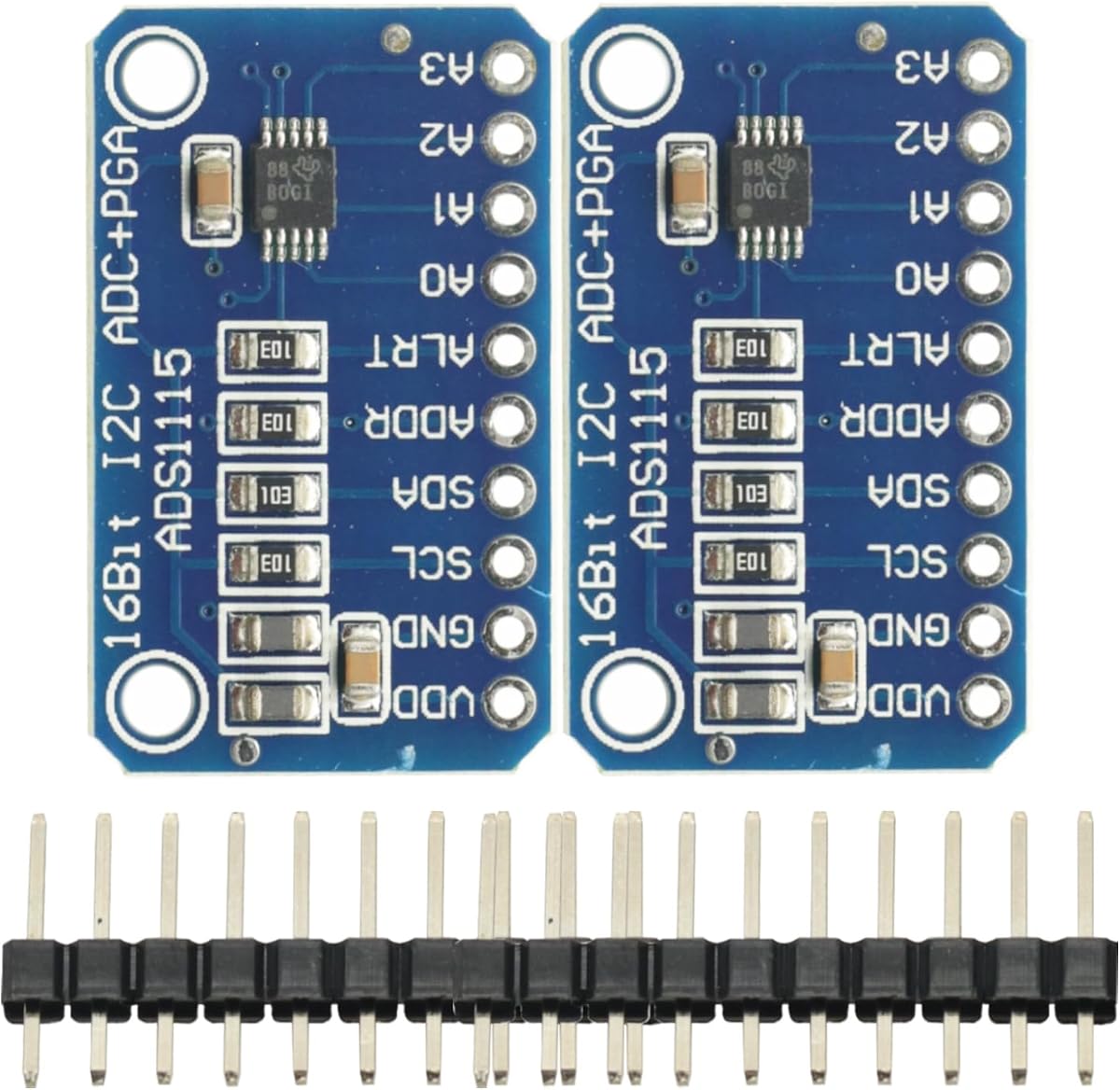
This guide compares the top 10 Arduino ADC Board options for 2026 based on resolution, channel count, and compatibility to help you choose the right module.
As an Amazon Associate we earn from qualifying purchases. We may earn a commission when you buy through links on this page, at no additional cost to you. Read our affiliate disclosure.As an Amazon Associate we earn from qualifying purchases.Purchases through our links may earn us a commission, at no extra cost to you. Read our affiliate disclosure.
An Arduino ADC board is essential for reading analog signals with microcontrollers lacking built-in converters. These modules allow precise measurement of sensors like thermocouples, strain gauges, and light detectors across various voltage ranges.
We evaluated ten leading ADC boards based on resolution, sample rates, interface types, and user feedback. Our analysis focuses on real-world performance, ease of integration, and reliability for both hobbyist and professional embedded system projects.
Each selection highlights specific strengths such as precision, channel count, or price efficiency. Please note that product availability and pricing may fluctuate over time, so verify current details before making your final purchasing decision for your project.
Top 3 Picks for Best Arduino ADC Board
Best Budget
Teyleten Robot ADS1115 16 Bits 4 Channel Analog-to-Digital Converter Precised Develop Board Module Amplifier Board ADC I2C IIC for Arduino Raspberry Pi (Pack of 3pcs)
The following table provides a side-by-side comparison of the ten most recommended ADC boards available for Arduino and similar microcontroller platforms in 2026. We highlight key specifications like resolution, channel configuration, and communication protocols to streamline your selection process.
HiLetgo ADS1256 5V 8 Channel 24 Bit ADC Data Acquisition Board Module High Precision AD Collecting Data Acquisition Card
24-bit resolution
8 input channels
30ksps sample rate
SPI interface
This board stands out for its exceptional 24-bit resolution, making it ideal for projects requiring ultra-precise analog measurements. It integrates the TI ADS1256 chip, which is highly regarded in professional data acquisition systems for its stability and accuracy.
Pros
Extremely high resolution
Multiple input channels
Onboard reference voltage
Low nonlinearity
Suitable for precision
Cons
Complex setup process
Higher power usage
We may earn a commission when you buy through this link, at no additional cost to you.
With eight input channels, users can monitor multiple sensors simultaneously without needing multiple boards. The onboard ADR03 reference voltage source ensures consistent readings by providing a stable 2.5V datum, reducing errors from external power supply fluctuations.
While the performance is outstanding, the complexity of SPI communication and the need for careful wiring can be challenging for beginners. Additionally, the higher sampling rate of 30ksps might consume more power than lower-speed alternatives.
This module is best suited for engineers or advanced hobbyists working on industrial control systems, scientific data logging, or applications where signal integrity and high resolution are non-negotiable priorities.
High Precision Measurements
The 24-bit conversion capability allows detection of minute voltage changes, critical for strain gauge or load cell applications.
Multi-Channel Support
Eight channels enable complex monitoring setups, such as environmental sensing arrays or multi-variable industrial control systems.
Teyleten Robot ADS1115 16 Bits 4 Channel Analog-to-Digital Converter Precised Develop Board Module Amplifier Board ADC I2C IIC for Arduino Raspberry Pi (Pack of 3pcs)
16-bit resolution
4 input channels
I2C communication
Pack of 3
This value pack offers three identical ADS1115 modules, providing excellent coverage for projects needing redundancy or multiple sensor nodes at a low cost. The 16-bit resolution is sufficient for most general-purpose analog readings like temperature, light, or potentiometer inputs.
Pros
Affordable multi-pack deal
Easy I2C interface
Programmable gain amplifier
Wide voltage range
Good for Raspberry Pi
Cons
Limited to 16-bit
Single-ended only mostly
We may earn a commission when you buy through this link, at no additional cost to you.
The I2C interface simplifies wiring significantly compared to SPI, requiring only two data lines. Additionally, the programmable gain amplifier allows users to amplify small signals, making it versatile for low-voltage sensors without extra circuitry.
While it lacks the higher resolution of the ADS1256, its performance is stable and reliable for typical maker projects. Users should note that configuration settings are handled via I2C registers, which may require some initial setup time.
This option is perfect for students, classroom labs, or prototyping phases where cost efficiency and simplicity are key considerations for acquiring multiple ADC modules.
Cost Efficiency
Buying three units at once reduces the average cost per module significantly compared to single-unit purchases.
Wide Compatibility
The board supports both 3.3V and 5V logic levels, making it universally compatible with various Arduino boards and Raspberry Pi models.
Lonely Binary 3-Pack ADS1115 16-Bit ADC I2C Module for C++ & ESP32
16-bit resolution
Gold-plated PCB
I2C chaining
RoHS compliant
Lonely Binary focuses on build quality and reliability, offering modules with ENIG gold-plated surfaces for superior solderability and corrosion resistance. This makes the boards robust for long-term deployments where environmental factors might affect standard PCBs.
Pros
High-quality PCB finish
Lead-free materials
Pre-soldered headers
Library support available
Multi-module chaining
Cons
Higher price point
Limited availability
We may earn a commission when you buy through this link, at no additional cost to you.
The modules support up to four units on a single I2C bus by assigning different addresses, allowing for up to sixteen channels with just one board connection. This scalability is a distinct advantage for complex projects like multi-sensor environmental monitors.
While the performance matches standard ADS1115 chips, the premium price reflects the enhanced physical construction and community support via open-source libraries. It may not be necessary for one-off prototyping but shines in permanent installations.
This set is recommended for professionals or educators who require consistent quality across multiple units and value durability in educational or commercial IoT settings.
Durability and Finish
The ENIG gold plating protects against oxidation and ensures reliable connections even in humid or fluctuating temperature environments.
Scalable Architecture
The ability to daisy-chain modules via unique I2C addresses makes it easy to expand system capacity without redesigning wiring.
HiLetgo ADS1115 16 Bit I2C Module Precision ADC 4 Channel Analog-to-Digital Converter Development Board Pro Gain Amplifier for Arduino Raspberry Pi ADC Module
16-bit resolution
I2C interface
PGA included
2-pack set
This unit has achieved a perfect rating from users, indicating high satisfaction with its ease of use and reliability. The 16-bit conversion is paired with a programmable gain amplifier, allowing users to tailor sensitivity to their specific sensor requirements.
Pros
High user ratings
Simple I2C wiring
Programmable gain
Good documentation
Compact design
Cons
2-pack only
No differential support
We may earn a commission when you buy through this link, at no additional cost to you.
The board is designed to fit comfortably on standard breadboards with clear pin labeling, making it approachable for those new to ADC conversion. It operates within a standard voltage range of 2.0V to 5.5V, fitting most 3.3V and 5V logic levels.
While it lacks advanced features like high-speed sampling or differential inputs, its simplicity is a strength for basic projects. Users might find the 2-pack configuration slightly limiting if they need to build larger systems without extra orders.
This board is an excellent starting point for DIY enthusiasts and hobbyists looking to add analog sensing to their projects without a steep learning curve.
User Satisfaction
The 5.0 rating reflects consistent performance and reliable quality control across manufacturing batches.
Simplified Integration
Clear labeling and standard headers reduce setup time, making it ideal for quick prototyping sessions.
HiLetgo 3pcs ADS1115 16 Bit 16 Byte 4 Channel I2C IIC Analog-to-Digital ADC PGA Converter with Programmable Gain Amplifier High Precision ADC Converter Development Board for Arduino Raspberry Pi
3-pack units
I2C interface
PGA amplifier
Comparator mode
This set is particularly useful for Raspberry Pi users since the Pi lacks native analog GPIO pins. The three boards provide ample coverage for multi-sensor setups like home automation or weather stations without needing complex external interfaces.
Pros
Ideal for Pi use
No analog pins needed
Cost-effective 3-pack
Comparator functionality
Wide voltage range
Cons
Standard resolution
Limited speed
We may earn a commission when you buy through this link, at no additional cost to you.
The programmable gain amplifier helps adjust sensitivity, while the comparator mode allows for direct hardware-level threshold detection, reducing CPU load. Users can configure it to trigger events when a voltage crosses a specific threshold independently of the main loop.
The 3-pack configuration makes it a practical choice for those needing redundancy or multiple isolated input channels. However, the speed is limited to 860 samples per second, which is not suitable for high-frequency signal analysis.
This product is best for home automation projects, educational kits, or any application where multiple analog inputs are needed on a Pi or similar single-board computer.
Raspberry Pi Support
Designed to bridge the gap between Pi GPIO and analog sensors, offering a plug-and-play solution for Linux-based controllers.
Comparator Mode Utility
Hardware-based threshold triggering simplifies logic for alerts, alarms, or safety systems without constant software polling.
Offering four units in a single purchase, this option is ideal for bulk projects or classrooms where multiple students need individual kits. The standard ADS1115 chip ensures compatibility with a vast range of libraries and example codes available online.
Pros
Large quantity pack
Low unit cost
Standard ADS1115 chip
Supports differential
Compatible with many MCUs
Cons
Mixed quality reports
Generic packaging
We may earn a commission when you buy through this link, at no additional cost to you.
The I2C interface is straightforward, and the boards are capable of both single-ended and differential measurements, providing flexibility for different sensor types. Voltage tolerance from 2.0V to 5.5V makes them adaptable to various power sources.
Users should verify the quality of soldering and components as some reports indicate variability in manufacturing quality for budget items. Additionally, the lack of specific branding or unique features means it performs like a standard generic module.
This bulk pack is most suitable for educational programs, prototyping labs, or developers who need to test configurations across several units simultaneously.
Bulk Utility
Purchasing four boards reduces per-unit shipping costs and ensures enough spares for testing and experimentation.
Standard Compatibility
Using a widely supported chip means community support and documentation are readily available without needing proprietary software.
2PCS ADS1115 16 Bit IIC I2C Analog to Digital Converter Module Precision ADC Converter 4 Channel Development Board Programmable Gain Amplifier 2.0V to 5.5V for Arduino Raspberry Pi
2-pack units
I2C interface
PGA amplifier
Input voltage range
This 2-pack provides a concise solution for projects requiring two isolated ADC inputs or redundancy. The boards are compact and fit well in enclosed enclosures or breadboard setups with limited space.
Pros
Compact 2-pack
High reliability
Programmable gain
Input range options
Addressable chaining
Cons
Limited quantity
Basic features
We may earn a commission when you buy through this link, at no additional cost to you.
Users can program input ranges from +/- 0.256V to +/- 6.144V, allowing for adaptation to different sensor voltage levels without external dividers. The 7 types of input ranges offer flexibility for precise scaling of analog data to digital values.
While the quantity is lower than other options, the high rating suggests consistent quality and performance. It is a reliable choice for dual-sensor projects such as monitoring supply voltage and signal input simultaneously.
This set is ideal for small-scale automation, robotics, or home monitoring projects where space and simplicity are prioritized over large channel counts.
Flexible Input Ranges
Programmable voltage ranges ensure accurate readings for sensors with different output scales without needing external signal conditioning.
Addressable Chaining
The ability to set unique I2C addresses allows multiple modules to be used on the same bus without interference.
Teyleten Robot AD7606 Module Multi-Channel AD Data Acquisition Module 16-bit ADC 8-Channel Synchronization Sampling Frequency 200KHz
16-bit resolution
8 input channels
200KHz sampling
SPI communication
This module stands out for its high sampling rate of 200kHz, which is significantly faster than typical ADS1115 boards. It is designed for capturing fast transient signals, making it valuable for vibration analysis or motor monitoring.
Pros
High sampling speed
Synchronized sampling
Multiple channels
Wide input range
Cons
Complex interface
Lower user ratings
Higher cost
We may earn a commission when you buy through this link, at no additional cost to you.
The synchronized sampling feature ensures all channels are read simultaneously, which is crucial for phase-sensitive measurements or power line analysis. The wide input voltage range of +/- 5V or +/- 10V allows direct connection to higher voltage signals.
Despite its technical advantages, it has lower user ratings due to the complexity of setup and potential compatibility issues with standard Arduino libraries. Users often need custom code to handle the high-speed SPI data stream effectively.
This board is recommended for specialized engineering tasks requiring high bandwidth and simultaneous multi-channel capture, rather than general-purpose sensing.
Fast Signal Capture
The 200kHz sampling rate enables the detection of rapid signal changes that would be missed by slower ADC modules.
Simultaneous Sampling
Reading all channels at the same time prevents timing skew in applications like motor control or multi-phase power monitoring.
This 4-pack of modules is well-regarded for reliability and ease of use in IoT applications. The high 4.6 rating indicates users appreciate the consistent performance and stability of the readings over long periods.
Pros
High user rating
Easy integration
Compatible with ESP32
Ideal for sensors
Stable readings
Cons
Standard speed
Basic packaging
We may earn a commission when you buy through this link, at no additional cost to you.
Designed to work with popular platforms like ESP32 and STM32, it fits seamlessly into modern IoT architectures. The programmable gain amplifier allows for precise measurements from low-voltage sensors such as thermocouples or load cells.
The modules support standard I2C communication, which is efficient for microcontrollers with limited GPIO pins. Users can leverage existing libraries to quickly prototype sensor nodes for environmental monitoring or industrial control.
This set is excellent for developers building distributed sensor networks or needing multiple isolated ADC nodes in a single deployment.
IoT Integration
The compatibility with modern microcontrollers and standard protocols simplifies integration into wireless sensor networks.
Sensor Stability
Stable readings over time make these modules reliable for continuous monitoring without frequent recalibration.
HiLetgo ADS1115 16 Bit 16 Byte 4 Channel I2C IIC Analog-to-Digital ADC PGA Converter with Programmable Gain Amplifier High Precision ADC Converter Development Board for Arduino Raspberry Pi
I2C interface
PGA amplifier
16-bit resolution
Comparator mode
This single-board option offers a straightforward entry point for users needing just one ADC channel. It provides essential features like programmable gain and comparator mode in a compact form factor suitable for small projects.
Pros
Single unit option
Low price point
Simple setup
Broad compatibility
Cons
Single unit only
Basic performance
We may earn a commission when you buy through this link, at no additional cost to you.
The module works well with both Arduino and Raspberry Pi platforms, making it a versatile choice for those transitioning between different microcontrollers. It offers a balanced set of features without overwhelming the user with unnecessary complexity.
While the speed and resolution are standard for the ADS1115 chipset, it delivers consistent results for typical applications like reading potentiometers or environmental sensors. Users should verify pinout consistency with their specific board version.
This is a solid choice for quick tests, simple sensor readings, or educational demonstrations where a single input is sufficient.
Simple Entry
Ideal for beginners who need a single ADC channel without investing in multi-pack kits or complex setups.
Versatile Compatibility
Supports multiple platforms and logic levels, ensuring flexibility across different project architectures.
We may earn a commission when you buy through this link, at no additional cost to you.
Buying Guide – How to Choose the Best Arduino ADC Board
Selecting the right ADC board involves understanding your project's resolution, channel, and interface requirements. This guide breaks down the essential factors to ensure you choose a module that performs reliably.
Resolution and Accuracy
Resolution determines how small a voltage change the ADC can detect. For most sensor applications, 16-bit is sufficient, but 24-bit is needed for high-precision tasks like weigh scales. Always check the chip datasheet to understand effective resolution versus nominal bits.
Higher resolution provides better detail but may require more processing power. Balance your accuracy needs with your microcontroller's capabilities to avoid bottlenecks.
Input Channel Count
Consider how many sensors you need to connect. Single-channel modules are simple, but multi-channel boards reduce wiring complexity. Some boards support both single-ended and differential inputs, which helps with noise rejection.
If you need more channels, check if the module supports daisy-chaining or if you need multiple boards. I2C addressing can help manage multiple units efficiently on one bus.
Communication Interface
ADC boards typically use SPI or I2C interfaces. SPI offers faster data rates, while I2C uses fewer pins. Choose based on your microcontroller's pin availability and your data speed requirements.
For simple hobby projects, I2C is often easier to set up. For high-speed sampling, SPI is necessary to maintain performance.
Voltage Compatibility
Ensure the board supports your logic voltage levels, such as 3.3V or 5V. Some boards are logic-level tolerant, which simplifies integration with modern microcontrollers like ESP32 or Arduino Due.
Mismatched voltage levels can damage your microcontroller or cause reading errors. Verify the supply and input range specifications before purchasing.
Gain Amplification
A programmable gain amplifier (PGA) allows you to amplify small signals for better resolution. This is crucial for low-voltage sensors like thermocouples or load cells.
Without a PGA, small signals might fall below the noise floor. Check if the module has a built-in PGA to avoid adding external components.
Sample Rate
Sample rate determines how quickly the ADC converts signals. For slow-changing data like temperature, a low rate suffices. For audio or vibration, a higher rate is required.
Select a sample rate that matches your signal frequency. Oversampling can improve resolution but consumes more power and CPU resources.
Build Quality
The physical construction of the board affects longevity and reliability. Look for boards with proper soldering and clear labeling. Premium models often have gold plating to resist corrosion.
Poorly constructed boards may lead to connection failures over time. Investing in quality ensures consistent performance for long-term projects.
Software Support
Good libraries simplify coding. Check if there are open-source libraries available for your development platform. Well-documented APIs save time and reduce errors.
Community support is valuable for troubleshooting. Platforms like Arduino or ESP32 often have many examples available for popular ADC chips.
How to Use and Care for Your Arduino ADC Board
To use the ADC board, connect VCC and GND to your microcontroller, and SDA/SCL to the I2C pins. Install the appropriate library for the chip model, such as ADS1x15 or ADS1256. Configure the gain and sample rate settings in your code.
Calibrate the board using a known reference voltage to ensure accuracy. Adjust the offset and gain values in your software to match real-world readings. Keep the board in a stable environment to avoid temperature drift affecting measurements.
For maintenance, avoid exposing the board to moisture or extreme temperatures. Check connections regularly to prevent loose wires. If storing for long periods, keep the board in a dry place to prevent corrosion on pins.
Frequently Asked Questions
What is the main difference between SPI and I2C ADC boards?
SPI interfaces offer faster data transfer speeds, making them suitable for high sampling rates. I2C uses fewer pins, simplifying wiring for simpler projects. Choose based on speed needs and pin availability.
Can I use an ADC board with Raspberry Pi?
Yes, most I2C ADC boards are compatible with Raspberry Pi since they lack built-in analog pins. You just need to enable I2C in the OS and use a Python library to read data.
What does a programmable gain amplifier do?
A PGA amplifies small input signals to utilize the ADC's full range. This improves resolution for low-voltage sensors. It can be configured via software to match your sensor's output.
Are all ADS1115 boards the same?
While they use the same chip, build quality and component quality vary. Some boards have better voltage regulators or gold plating. Check reviews and specifications to find a reliable unit.
How do I read differential inputs?
Some ADC boards support differential inputs to cancel out noise. Connect your sensor to two channels instead of one to ground. Configure the library to read the difference between these channels.
Do I need to calibrate the ADC?
Yes, calibration ensures accuracy by comparing readings to a known reference. Adjust software offset and gain values to correct any deviations. Regular calibration maintains reliability over time.
What voltage range do these boards support?
Most common boards operate between 2.0V and 5.5V. Some high-end boards support up to +/- 10V inputs. Always check the specific datasheet to ensure compatibility with your power source.
Final Thoughts on Choosing the Best Arduino ADC Board
We reviewed ten top ADC boards, highlighting the HiLetgo ADS1256 for precision, the Teyleten ADS1115 for budget efficiency, and the Lonely Binary for build quality. Each serves a specific need depending on project complexity and constraints.
When selecting a board, prioritize resolution and interface compatibility with your microcontroller. Consider whether you need high-speed sampling or multi-channel support to avoid buying features you do not require.
Always verify current prices and availability before purchasing as market conditions change. Investing time in research ensures you get the best performance for your embedded system project.