
EBOOT 30 Pieces Photoresistor
4.6Editor score
30 photoresistors included
5mm GM5539 type
Wide operating temperature
Discover the top light sensor for Arduino options for October 2026. We compare photoresistors, photodiodes, and digital modules to help you choose the right
Choosing the right light sensor for Arduino projects is essential for creating responsive automation systems. Whether you need simple ambient light detection or precise intensity measurement, the right module ensures reliable performance. We explore the most popular options available today for makers and professionals.
Our team evaluated ten top-rated modules based on compatibility, accuracy, and ease of use. We examined digital and analog outputs, voltage requirements, and build quality. This list covers everything from basic photoresistors to advanced integrated circuits designed for modern microcontrollers.
Each pick highlights key features, pros, and cons to help you decide quickly. Prices and availability can change frequently, so verify details before purchasing. Use this guide to find the perfect light sensor for your next electronics or robotics build today.
4.6Editor score

4.4Editor score
5.0Editor score
This comparison table provides a side-by-side look at all ten selected light sensor modules. Review key specifications like sensor type, output options, and package count to find the best fit for your specific project requirements.


This module stands out as a reliable choice for detecting ambient light levels in Arduino projects. It combines a classic photoresistor with an LM393 comparator to provide clean digital signals alongside analog data. Users report consistent performance across a wide range of lighting conditions. The included potentiometer allows for easy calibration to suit specific project needs without extra code.
We may earn a commission when you buy through this link, at no additional cost to you.
The LM393 voltage comparator ensures the signal remains stable even when lighting changes rapidly. This makes it ideal for automatic control systems like street lights or display dimmers. The module supports both 3.3V and 5V systems, making it versatile for modern microcontrollers. The driving capability exceeds 15mA which is sufficient to trigger relay modules directly without intermediate transistors.
While the potentiometer provides flexibility, it can sometimes loosen during transport or handling. This requires users to recheck settings before final installation. The board size is slightly larger than some compact alternatives but remains easy to mount with standard headers. Overall the trade-off for stability and versatility is acceptable for most hobbyists and professionals.
If you need a balance between simplicity and control this module is an excellent starting point. It works seamlessly with Arduino Raspberry Pi and ESP32 boards. The six-pack ensures you have spares for multiple prototypes or classes. We recommend this for anyone building automated lighting systems that require reliable threshold detection and stable output signals.
The LM393 comparator converts the resistance change into a clean logic signal. This reduces noise and ensures your microcontroller reads accurate values every time.
Support for both 3.3V and 5V systems means this sensor fits almost any modern board. You do not need level shifters for most common microcontrollers.
We may earn a commission when you buy through this link, at no additional cost to you.
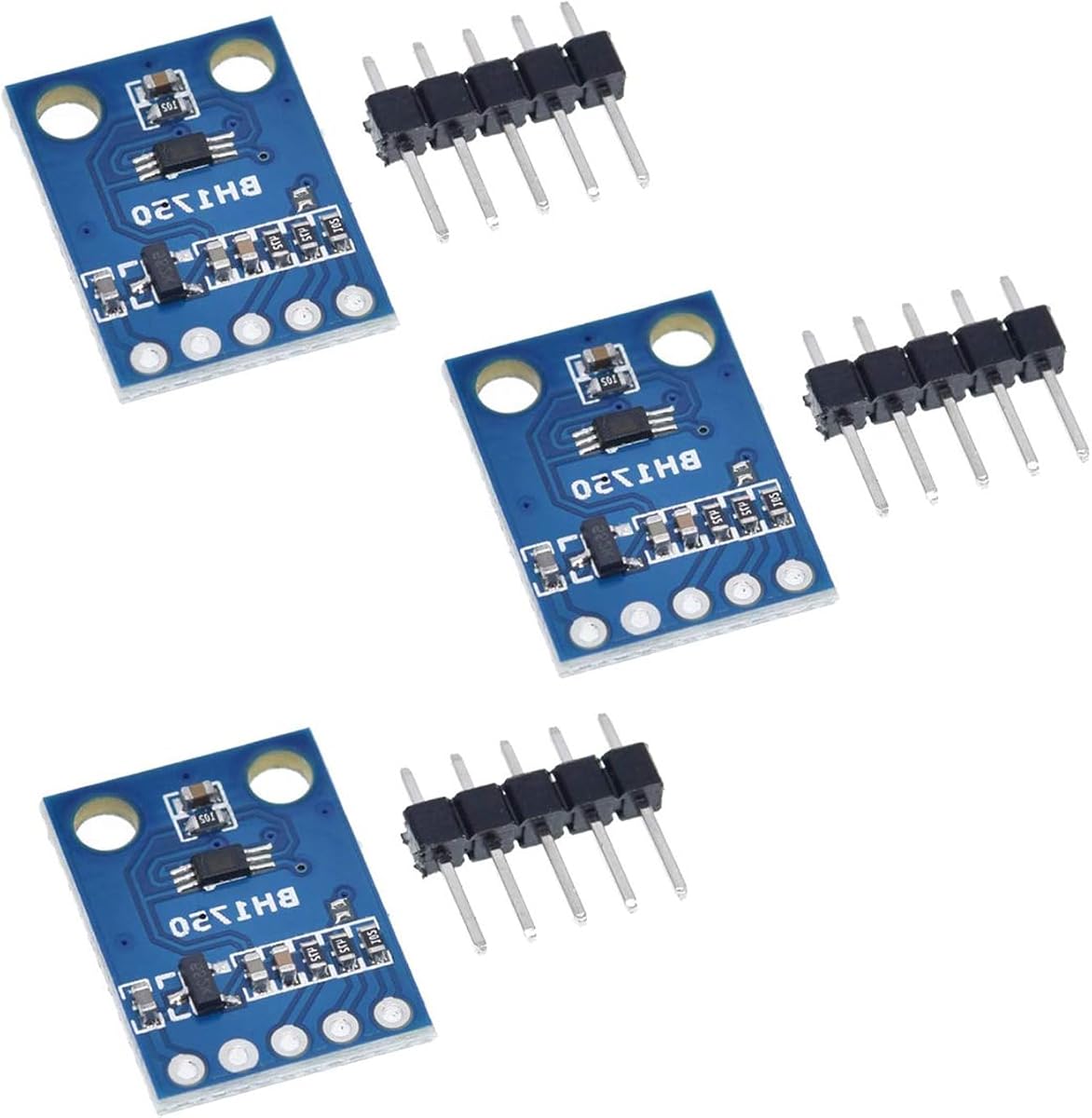
The GY-302 module offers precise light intensity measurement using the BH1750FVI chip. Unlike basic photoresistors it provides direct digital lux readings which simplifies code and improves accuracy. This is ideal for projects needing exact light values rather than just on off states. The compact size makes it perfect for space constrained builds on breadboards or PCBs.
We may earn a commission when you buy through this link, at no additional cost to you.
High quality chips from ROHM ensure the readings remain consistent over time and temperature changes. The I2C interface frees up analog pins on your microcontroller allowing more sensors to be added. Users praise the ease of setup with standard libraries available for Arduino and ESP32. It is a strong choice for smart home devices requiring accurate ambient data.
The reliance on I2C means you must have working pull-up resistors on your bus. This might confuse beginners used to simple analog wiring. Also the module does not offer analog output which limits some custom applications. However the digital precision usually outweighs these limitations for professional and advanced hobbyist projects.
Choose this module if you need accurate light measurements without extra calibration code. It is excellent for weather stations or automated lighting. The three-pack provides value for building multiple units. We recommend it for anyone prioritizing data accuracy over basic threshold detection in their Arduino designs.
Getting direct lux values avoids the guesswork of mapping analog values. This makes your application logic cleaner and more accurate across different environments.
The compact 13.9mm by 18.5mm size saves room on your board. You can fit more components nearby while keeping wiring neat and organized.
We may earn a commission when you buy through this link, at no additional cost to you.
HiLetgo provides a trusted source for the GY-302 module using the original ROHM chip. This ensures that your light readings are accurate and stable over long periods. The three-pack gives you plenty of units to share among friends or use in multiple prototypes. It is a standard choice for educational kits and commercial sensor arrays.
We may earn a commission when you buy through this link, at no additional cost to you.
The digital nature of the output means less noise interference compared to analog sensors. This is crucial when your code needs precise brightness levels for automation. The compact design fits easily into tight spaces like inside enclosures or behind displays. Users find the libraries widely available making integration fast and straightforward for beginners.
You will need to manage the I2C bus correctly which adds a small learning curve. Without proper pull-ups communication may fail leading to confusing errors. Also lack of analog output restricts some custom circuit designs. Despite this the reliability and ease of use make it a top contender in the sensor market.
Ideal for smart home or environmental monitoring projects this module delivers what you need. It works well with ESP32 and Raspberry Pi as well as Arduino. The quality of the chip ensures it lasts through many iterations. We recommend this for anyone needing reliable digital light data in a small package.
Using the original ROHM chip guarantees performance matches the datasheet. You get consistent results without dealing with generic copies that vary in accuracy.
Support for 3 to 5V power means it works with nearly any controller. You can swap boards easily without worrying about voltage mismatch issues.
We may earn a commission when you buy through this link, at no additional cost to you.
This photodiode module is distinct because it senses light from a fixed direction. This makes it perfect for line following robots or line sensors that need to look forward. It has an analog output for detailed readings and a digital output for simple triggers. The pack of ten allows you to set up arrays for complex detection tasks.
We may earn a commission when you buy through this link, at no additional cost to you.
The directional nature helps block out stray light that could interfere with readings. This is essential for projects like automatic curtains or tracking solar panels. The blue potentiometer lets you fine tune the threshold quickly without writing code. The module includes fixing bolt holes which makes mechanical installation easier than soldering wires.
Because it is directional you must orient the sensor carefully during mounting. Improper angle can lead to missed signals or false positives. You may need to test positions repeatedly to get the right alignment. However for applications requiring focused detection this trait is a strong advantage over omnidirectional sensors.
Choose this for robotics or industrial control where direction matters. It pairs well with motor drivers and relay systems. The voltage support covers most microcontrollers. We recommend this for makers building light seeking robots or automated systems requiring targeted illumination checks.
Directional sensors avoid noise from ambient light around the device. This ensures the robot only reacts to light directly in front of it.
Fixed bolt holes mean you can attach the module to a chassis quickly. This saves time compared to building custom brackets for smaller components.
We may earn a commission when you buy through this link, at no additional cost to you.
This pack provides thirty individual photoresistors ideal for bulk projects or classroom kits. It offers the lowest cost per unit for raw sensors without extra circuitry. The GM5539 type is a standard choice compatible with most voltage dividers. This is best for those who want to build their own custom modules from scratch.
We may earn a commission when you buy through this link, at no additional cost to you.
The high voltage rating of 150V and wide temperature range make these robust for varied environments. They perform well in both hot and cold conditions without failure. You can use these in DIY projects needing many sensors at low cost. The spectral peak at 540nm matches human eye sensitivity well for ambient light tasks.
Since these are bare components you must solder or wire them into a circuit. This requires some basic electronics knowledge and tools like a breadboard. You will need to design your own voltage divider to read them with Arduino. While this adds work it gives you full control over the sensor layout.
Perfect for large scale automation or prototyping this is the most budget friendly option. It suits students or makers who want to learn circuit design. We recommend this for anyone needing quantity and flexibility at the lowest possible cost.
Thirty units ensure you have enough for many projects or students. This reduces the need to order again when a part breaks or is used.
Building your own circuit lets you optimize for size and power. You can choose resistor values to fit your specific voltage and logic levels.
We may earn a commission when you buy through this link, at no additional cost to you.
This module offers a simple and effective solution for detecting light levels. It comes as a ready to use board with clear pins for easy wiring. The comparator chip ensures the output switches cleanly when light changes. Users can control a relay directly making it great for automated switching systems.
We may earn a commission when you buy through this link, at no additional cost to you.
The potentiometer allows you to set the trigger point without coding. This speeds up testing and calibration for beginners and experts alike. The digital output can drive small loads or connect to a microcontroller. It is a reliable option for projects needing basic on off light control without complex data.
It does not provide detailed analog intensity values which limits advanced use cases. However the simplicity is a strength for robust applications. The board is larger than surface mount options but easier to wire for prototyping. Most users find it works well in various environmental conditions.
For home automation or industrial triggers this module is straightforward and effective. It supports both 3.3V and 5V logic easily. The pack of ten allows for distributed sensing in multiple rooms. We recommend this for anyone needing a simple and fast light switch circuit.
Setting a threshold with a screwdriver is faster than programming. This makes quick adjustments easy for testing or changing conditions.
The output can drive relays directly for high voltage loads. This means you can control lamps or motors without extra transistor circuits.
We may earn a commission when you buy through this link, at no additional cost to you.
This sensor module is designed specifically for compatibility with a range of microcontrollers. It supports Arduino ESP32 ESP8266 and Raspberry Pi making it versatile for any stack. The module provides both analog and digital outputs for flexibility in design. Users appreciate the included tutorials which help get started quickly without searching elsewhere.
We may earn a commission when you buy through this link, at no additional cost to you.
The built-in potentiometer lets you adjust sensitivity easily for specific needs. It works on 3.3V logic which is common for modern boards. This is useful for IoT devices where power efficiency and modern features are key. The four-pack is sufficient for a small set of prototypes or learning exercises.
It does not offer high precision data compared to specialized chips. However for basic detection tasks it performs reliably. Some users may find the package size small but the value is high for the number of units. It is a good general purpose choice for hobbyists exploring multiple platforms.
If you use a mix of microcontrollers this is a safe and easy choice. It avoids the need for different sensors for different boards. The tutorials are a bonus for beginners. We recommend this for learners wanting a simple way to detect light across various projects.
One sensor works with both 3.3V and 5V boards. This simplifies shopping and wiring when you switch between Arduino and ESP devices.
Providing tutorials helps new makers save time on research. You can focus on building your project rather than figuring out wiring.
We may earn a commission when you buy through this link, at no additional cost to you.
This pack gives you fifty GL5516 photoresistors which is excellent for large builds. It has a high customer rating indicating consistent quality and performance. These components are ideal for solar tracking projects where you need multiple sensors. The resistance values are well suited for standard voltage divider circuits.
We may earn a commission when you buy through this link, at no additional cost to you.
With fifty units you can cover many areas or test many ideas without restocking. The bright resistance is low which ensures good sensitivity in daylight. They work well with 3.3V and 5V systems making them easy to integrate. The high rating suggests few defects or failures during use.
As bare components you must build your own circuits to read them. This requires soldering or prototyping skills which might not suit everyone. However for those comfortable with electronics it offers great value. You save money compared to buying pre-built modules for large scale deployments.
Choose this if you plan a big project like a solar tracker. It is also great for educational kits with many students. The compatibility with modern boards is a plus. We recommend this for projects needing many sensors at an affordable price point.
The low bright resistance ensures accurate readings in sunlight. This is critical for tracking the sun accurately for power generation.
Buying fifty pieces at once is far cheaper per unit. This helps keep costs low when deploying sensors across a large area.
We may earn a commission when you buy through this link, at no additional cost to you.
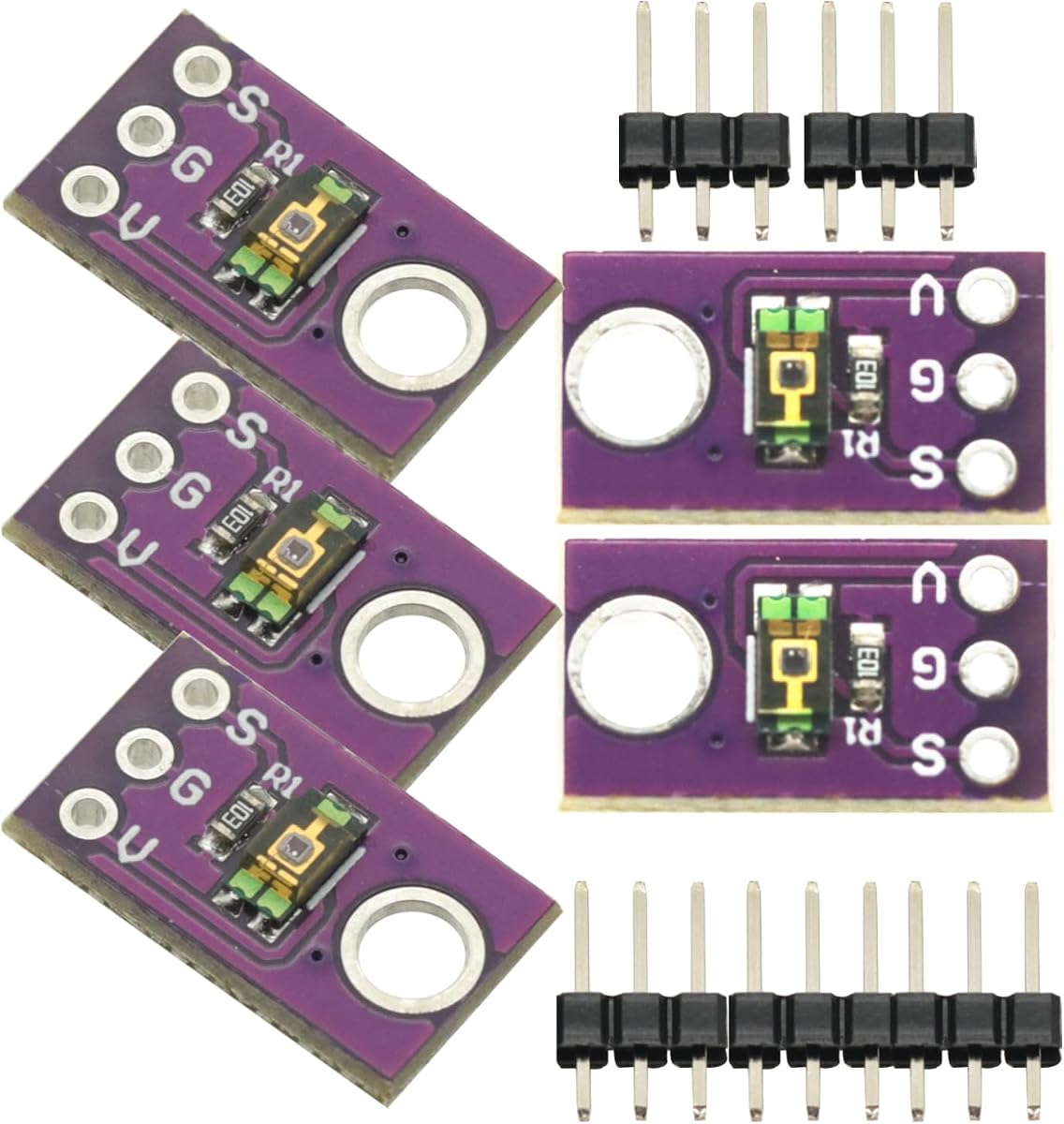
The TEMT6000 is a premium ambient light sensor designed for professional applications. It matches the human eye spectrum closely making it ideal for display backlight dimming. The perfect rating reflects its reliability and high quality. It is used in industrial settings where consistent and accurate light detection is critical.
We may earn a commission when you buy through this link, at no additional cost to you.
This module handles automatic brightness control for screens and keypads effectively. It provides stable current output proportional to light intensity. This allows for smooth adjustments without flickering. Its small size fits into tight enclosures like inside phones or devices. It is a top choice for high quality consumer electronics.
It is more expensive than basic photoresistors but the performance justifies the cost. Users looking for raw data may need to process the signal. However for precise control it delivers superior results. The build quality ensures it lasts long in demanding conditions.
For commercial or industrial projects this sensor is worth the investment. It works well with microcontrollers for precise control. We recommend this for anyone needing a reliable and high end light solution.
Industrial projects need sensors that do not fail. This module offers the stability required for professional and commercial uses.
Matching human vision ensures the brightness feels natural to users. This reduces eye strain and improves comfort in displays.
We may earn a commission when you buy through this link, at no additional cost to you.
This module is optimized for light intensity detection in smart car projects. It uses a wide voltage LM393 comparator for good stability in noisy environments. The three-pack is sufficient for testing small systems. It supports both digital and analog outputs which offers flexibility for different microcontrollers.
We may earn a commission when you buy through this link, at no additional cost to you.
The stable output ensures your system reacts correctly to changing light. This is important for safety features like automatic headlights. The compact board fits well in limited spaces inside vehicles. Users appreciate its robustness and ease of integration with Arduino systems.
While it is a basic design it delivers on its promises. Some users may want higher precision which this module does not provide. However for general light detection it is reliable. The price is competitive for the quality offered.
Best for smart car or vehicle automation this module is a solid choice. It handles voltage swings well and works with 3.3V or 5V. We recommend this for automotive prototypes requiring a dependable light sensor.
The wide voltage range handles vehicle power fluctuations safely. This ensures your sensor works reliably while the engine is running.
Having both digital and analog outputs lets you choose the best mode. You can test and decide which works best for your code.
We may earn a commission when you buy through this link, at no additional cost to you.
Selecting the right light sensor depends on your project needs. We explain key factors to consider before buying to ensure you get the best performance.
There are mainly three types: photoresistors (LDRs), photodiodes, and integrated light sensor chips. LDRs are cheap and simple but slow. Photodiodes are fast and directional. Integrated chips like BH1750 give precise digital data. Choose based on speed and accuracy needs.
Pick photoresistors for cost, photodiodes for direction, or chips for precision.
Sensors offer analog voltage or digital logic outputs. Analog requires mapping and is sensitive to noise. Digital provides stable high or low signals. For complex light levels choose analog or digital intensity. For simple switches choose digital threshold.
Select the output type your code can handle easily.
Check if the module supports 3.3V or 5V. Some older boards only work with 5V. Modern microcontrollers often use 3.3V. Ensure the sensor matches your board logic level to prevent damage or errors.
Match the sensor voltage to your controller exactly.
Modules come in different sizes. Small boards are better for portable devices. Larger boards are easier to wire. If space is tight consider surface mount. If ease is key pick a board with header pins.
Measure your project space before buying the module.
Some sensors see light from all sides others from one direction. Directional sensors prevent interference from side light. If you need precise tracking pick directional. If you need general brightness choose omnidirectional.
Decide if you need focused or general light detection.
Modules come as single units or packs. Buying packs lowers cost per sensor. If you need many units a pack is better. If you just need one a single module is enough.
Choose a pack for bulk or single for small projects.
Some sensors need software calibration while others have hardware trimmers. Hardware trimmers are easier to set. Software calibration gives more control. Decide which method suits your workflow.
Pick the calibration method that fits your skill.
Consider your use case like displays or industrial control. Specialized sensors exist for displays. General sensors work for simple tasks. Ensure the sensor matches your application requirements.
Pick a sensor built for your specific application.
Connect the VCC and GND pins to your power source. Attach the signal pin to an analog or digital pin on the board. Ensure wiring matches the diagram on the module.
Upload a test sketch to read values. Check output with a multimeter or serial monitor. Adjust sensitivity with potentiometers if available on the module.
Keep the sensor clean from dust. Protect it from moisture and direct physical impact. Mount securely to avoid loose wires and unstable readings.
The easiest choice is a module with an LM393 comparator and potentiometer. These give clear digital signals and are easy to wire without complex code. They are affordable and widely available in packs.
Use a potentiometer on the module to set thresholds. For digital outputs adjust the resistance until the LED flips. For analog use software to map values to specific light levels.
Yes most sensors support 3.3V logic used by ESP32. Check the voltage range in the specs before wiring. Ensure the output matches the GPIO input requirements.
Integrated digital chips like BH1750 usually need libraries for data reading. For basic modules you can read pins directly. Check the documentation for included tools.
Use a waterproof housing or silicone sealant for wiring. Ensure the cover allows light to pass. Check for weather resistance before leaving it outside.
Analog gives a range of values while digital gives on or off. Analog is better for intensity measurement. Digital is better for simple triggers and switches.
We highlighted ten top modules suitable for different needs. From budget photoresistors to professional chips there is a match for every project. The best choice depends on your specific requirements.
Prioritize accuracy if you need data and cost if you need many units. Always check voltage compatibility before purchasing. The right sensor ensures your project works smoothly.
Remember prices change so check current availability. Use this guide to find a reliable option for your needs. Your next automation project starts with the right sensor choice.