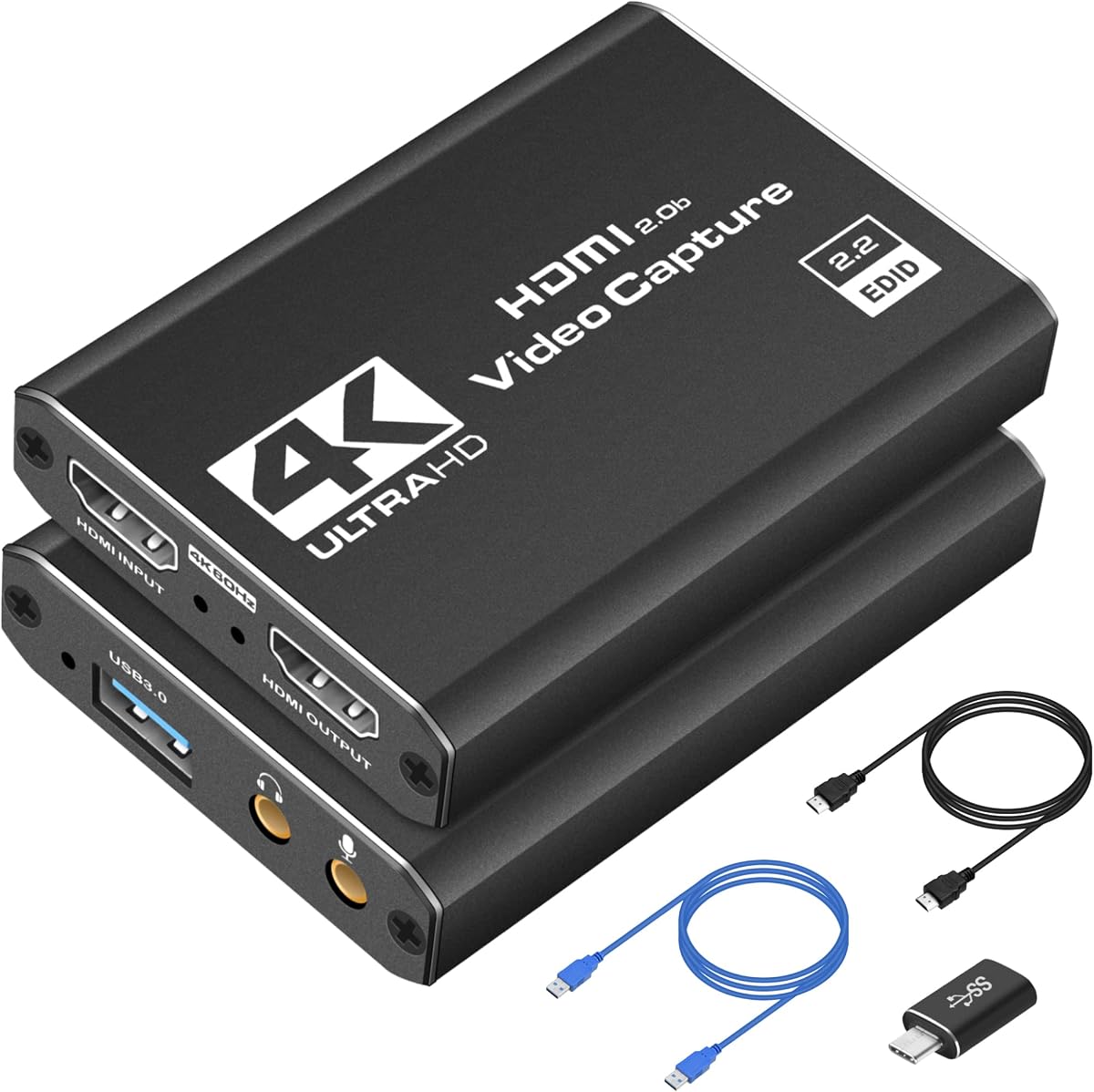
Capture Card 4K HDMI Video Streaming
4.4Editor score
Plug and Play USB Setup
1080P 60FPS Output
Universal Device Compatibility
This guide compares ten top audio capture cards for streaming, evaluating performance, compatibility, and features to help you choose the right device for your
Finding the right audio capture card for streaming is essential for creators who demand high-quality sound and video integration. Whether you are broadcasting games or hosting live events, reliable hardware ensures your audience hears and sees every moment clearly without technical glitches.
We evaluated ten leading capture devices based on resolution support, latency performance, audio mixing capabilities, and overall compatibility with popular streaming software. Each product was assessed for its ability to handle diverse inputs while maintaining stable connections across different operating systems and platforms.
Each pick below highlights specific strengths such as budget friendliness, professional features, or portability to suit varying needs. Please note that product availability and pricing fluctuate frequently, so always verify current details before making your final purchase decision today.
4.4Editor score

4.0Editor score

4.5Editor score
The following comparison table outlines key specifications for all ten reviewed capture cards to help you quickly identify which model meets your specific streaming requirements and budget constraints effectively.


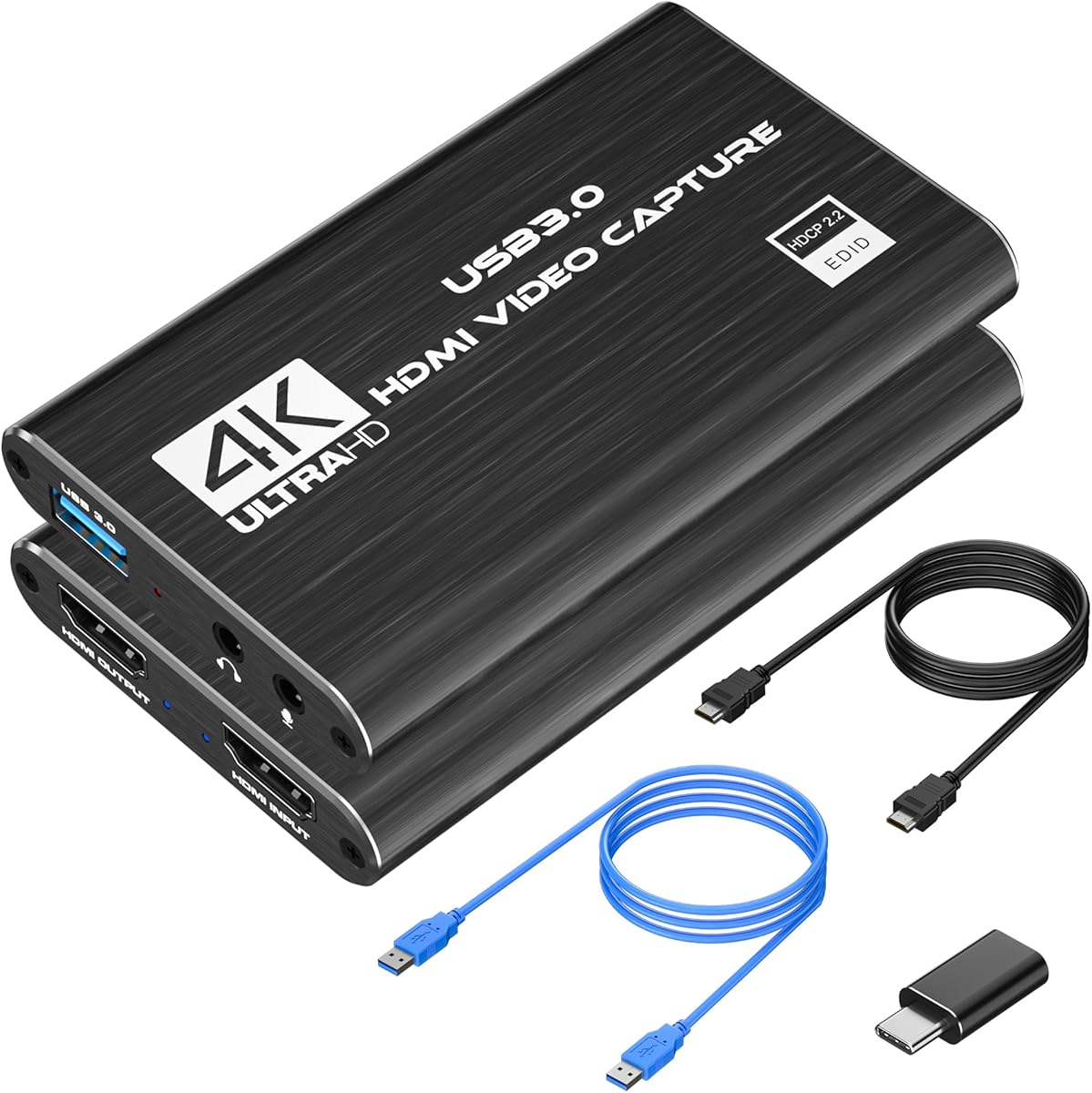


This capture card stands out as an ideal entry point for streamers needing reliable HD performance without breaking the bank. Its 4.4 rating reflects solid user satisfaction regarding basic functionality and ease of use across common gaming setups.
We may earn a commission when you buy through this link, at no additional cost to you.
The device supports 1080P 60FPS output which ensures smooth visuals for Twitch or YouTube broadcasts. Its USB 3.0 connection delivers stable data transfer while the HDMI loop out allows you to monitor gameplay without delay during live sessions.
While it lacks advanced audio mixing or 4K capture, these trade-offs are acceptable given its price point. The compact design makes it easy to pack for travel or LAN parties where quick setup is essential for uninterrupted streaming.
We recommend this model for beginners building their first streaming rig who prioritize value over high-end features. It provides a dependable foundation for learning broadcast software while maintaining consistent quality for casual gaming content.
Works seamlessly with OBS and Streamlabs ensuring quick configuration without technical hurdles for new users.
Lightweight build allows creators to carry it easily between different recording locations or gaming events.
We may earn a commission when you buy through this link, at no additional cost to you.
The OREI capture card earns its high rating through robust performance in both video and audio handling. Users appreciate its ability to capture 4K content while maintaining stable transmission through USB 3.2 Gen 1 connections.
We may earn a commission when you buy through this link, at no additional cost to you.
Its integrated audio mixing feature sets it apart from basic dongles by combining HDMI audio with mic inputs directly. This reduces the need for external mixers and simplifies the signal chain for professional production workflows at home studios.
Although it costs more than budget options the added features justify the investment for serious streamers. The lifetime tech support provides peace of mind ensuring any hardware or software issues are resolved promptly by the manufacturer.
This card suits creators transitioning from casual streaming to professional production who need better color and audio control. It balances performance and usability effectively making it a top choice for hybrid setups mixing gaming and educational content.
Built-in mixing allows seamless blending of game sound and voice commentary without extra hardware.
Lifetime technical assistance ensures long-term usability even as streaming software and standards evolve.
We may earn a commission when you buy through this link, at no additional cost to you.
This capture card repeats as a strong budget contender due to its consistent performance in core streaming tasks. It delivers reliable 1080P capture which meets the needs of most casual broadcasters and content creators just starting out.
We may earn a commission when you buy through this link, at no additional cost to you.
Users benefit from true plug and play functionality that eliminates driver installation hassles on Windows or Mac. The HDMI loop out feature ensures that gameplay monitoring remains smooth while the stream captures the same signal without input lag.
Its lightweight form factor makes it ideal for mobile streamers or those with limited desk space. However those seeking 4K capture or advanced audio routing will need to consider higher tier options for expanded capabilities.
We recommend this unit for anyone prioritizing simplicity and cost efficiency in their streaming hardware. It offers a hassle-free entry into content creation while maintaining enough quality for engaging audience interactions on social platforms.
Immediate recognition as a webcam on any system saves valuable setup time for new streamers.
Direct monitor passthrough allows real-time viewing while recording without performance degradation.
We may earn a commission when you buy through this link, at no additional cost to you.
The PORTTA DX20R targets gamers who demand high frame rate passthrough alongside 4K capture capabilities. Its support for 1080p@240Hz ensures competitive players see smooth visuals on their main monitor while streaming simultaneously.
We may earn a commission when you buy through this link, at no additional cost to you.
Advanced features like VRR and HDR passthrough maintain image fidelity from source to display without tearing. The smart control display lets you adjust settings directly on the device which adds convenience during live broadcasts.
Utility software provides extra control over EDID and audio though it may require some tuning for optimal results. This device balances performance with usability making it a versatile option for high-end console and PC gaming.
We recommend this card for streamers who need top-tier refresh rates without sacrificing capture quality. It suits those who play fast-paced titles and want to maintain professional broadcast standards across different content.
Passes 240Hz signals clearly ensuring smooth gameplay on high refresh rate monitors during streams.
Onboard display and switch simplify adjustments without needing to open settings menus constantly.
We may earn a commission when you buy through this link, at no additional cost to you.
This acer capture card offers reliable performance backed by a well-known manufacturer ensuring quality assurance. It supports 1080P 60Hz output which is sufficient for most streaming needs while preparing for future 4K inputs.
We may earn a commission when you buy through this link, at no additional cost to you.
The included mic-in port allows direct headset connection for voice commentary without extra adapters. This simplifies setup for educators or streamers who need to blend game audio with voice input seamlessly.
Users appreciate its lightweight design and broad compatibility with various streaming platforms and operating systems. While it lacks bundled software the plug and play nature ensures immediate use with tools like OBS or Streamlabs right away.
We recommend this card for users who prioritize brand reliability and straightforward hardware features. It serves well for daily streaming tasks and offers a stable platform for growing content creation efforts over time.
3.5mm mic port allows immediate voice capture without needing external audio adapters.
Works with Windows macOS and Android ensuring flexibility across different streaming setups.
We may earn a commission when you buy through this link, at no additional cost to you.
This capture card provides consistent performance for standard HD streaming needs with minimal setup time. It captures up to 1080P at 60FPS which covers the majority of current live broadcasting requirements effectively and reliably.
We may earn a commission when you buy through this link, at no additional cost to you.
The HDMI loop out ensures that you can monitor your source without delay during recording or streaming sessions. This dual capability makes it useful for both content creation and live broadcasting where real-time feedback is crucial.
Users find it compatible with a wide range of HDMI devices including consoles cameras and set top boxes. Its simplicity is a major strength though those needing higher resolutions or audio mixing should look elsewhere.
We recommend this card for beginners or casual streamers seeking dependable HD capture without complexity. It delivers steady results for YouTube gaming or classroom setups where basic functionality matters most.
Zero delay loop out allows simultaneous viewing and recording for smooth production flow.
Handles consoles cameras and boxes ensuring flexibility across different source devices.
We may earn a commission when you buy through this link, at no additional cost to you.
This device earns its Editor's Choice badge by combining video capture with professional audio mixing capabilities. The 4K zero-latency loop out ensures flawless synchronization between broadcast and gameplay monitoring for precise timing.
We may earn a commission when you buy through this link, at no additional cost to you.
The included XLR input with 48V phantom power supports studio-quality microphones without additional interfaces. Physical faders give you tactile control over levels which enhances precision during live broadcasts where audio balance matters greatly.
Additional features like voice changer modes and RGB lighting add unique flair to your stream atmosphere. While these features require setup time they offer creative tools not found on standard capture cards.
We recommend this card for podcasters or streamers who prioritize audio quality and interactive elements. It reduces cable clutter by merging multiple functions into one unit making it ideal for compact professional setups.
Built-in XLR connection allows direct microphone input without extra hardware costs.
Voice changing and sound pads add entertainment value and keep audiences engaged.
We may earn a commission when you buy through this link, at no additional cost to you.
The AVerMedia Live Gamer Ultra S targets enthusiasts who demand top-tier video fidelity and software integration. It captures 4K at 60Hz with HDR and VRR support ensuring dynamic range and refresh rates stay true to source.
We may earn a commission when you buy through this link, at no additional cost to you.
Its ability to capture 5.1 channel audio on Windows provides immersive sound quality for viewers. The USB 3.2 Type-C connection ensures high bandwidth for data transfer which reduces bottlenecks during high-resolution streaming.
Streaming Center software offers advanced workflow tools though relying on it adds a layer of complexity. Ultrawide resolution support makes it versatile for non-standard aspect ratios used in modern gaming and creative work.
We recommend this card for professional streamers needing advanced color and audio options. It delivers broadcast-level performance suitable for competitive gaming or detailed content production environments.
5.1 audio support provides rich soundscapes that standard stereo capture misses entirely.
USB-C interface handles large data volumes quickly ensuring stable high-resolution capture.
We may earn a commission when you buy through this link, at no additional cost to you.
The Elgato 4K Pro sets the benchmark for internal capture solutions with its support for 8K60 passthrough. This allows next-generation consoles and PCs to operate at full fidelity while you capture 4K content simultaneously without compromise.
We may earn a commission when you buy through this link, at no additional cost to you.
HDMI 2.1 connectivity enables ultra-high frame rates and bandwidth that external dongles cannot match. Its internal installation removes USB bottleneck issues and ensures consistent performance during long live broadcasts or recordings.
Ultra-low latency ensures synchronization between gameplay and broadcast which is critical for interactive streams. While the installation requires a free PCIe slot the stability and performance justify the effort for serious creators.
We recommend this card for professional broadcasters who need uncompromised quality and reliability. It offers future-proof connectivity and seamless integration with major streaming platforms for premium content production.
HDMI 2.1 ensures readiness for next-gen consoles without needing hardware upgrades later.
PCIe installation reduces external dependency ensuring stable performance during long sessions.
We may earn a commission when you buy through this link, at no additional cost to you.
This XIIXMASK capture card offers competitive performance with support for 4K60FPS capture and 1080P 120FPS recording. It handles high frame rate inputs smoothly making it suitable for fast-paced gaming content creation.
We may earn a commission when you buy through this link, at no additional cost to you.
The dual audio ports allow for embedding commentary and ambient sound without extra gear. Plug and play functionality ensures quick setup across Windows Mac and Android systems for versatile usage scenarios.
Its broad compatibility with consoles PCs and webcams provides flexibility for diverse content creation needs. Users find it reliable though firmware updates may be needed for full compatibility with specific devices.
We recommend this card for creators seeking high frame rate support without a premium price tag. It serves well for gaming streams where smooth motion clarity is a priority for audience engagement.
1080P 120FPS recording ensures crisp action sequences for competitive gaming content.
Separate input output ports simplify sound routing for commentary and game audio.
We may earn a commission when you buy through this link, at no additional cost to you.
Selecting the right capture card requires evaluating video resolution, audio capabilities, and connectivity to match your production needs.
Check the maximum capture resolution your card supports to ensure it matches your source device. Most streaming targets focus on 1080P 60FPS but higher-end cards offer 4K for professional production.
Look for models that support 4K input even if you stream in 1080P to future proof your setup for growing demand.
Ensure the card has sufficient audio inputs like 3.5mm mic-in or XLR if you plan to mix commentary directly. Integrated audio mixing reduces the need for external hardware and simplifies your workflow.
Prioritize cards with clean audio paths and phantom power support if you use condenser microphones for professional quality.
Low latency is critical for live streaming to avoid delays between your gameplay and what the audience sees. HDMI loop-out ensures zero delay monitoring on your main screen during capture.
Select cards with high USB bandwidth to prevent bottlenecks that could increase latency during high resolution streaming.
Verify that the capture card works seamlessly with your operating system and streaming software like OBS. Most modern cards are plug and play but some require specific drivers for full functionality.
Check for UVC UAC compliance to ensure compatibility across Windows macOS and Linux without extra configuration steps.
USB 3.0 is the standard for most capture devices but USB 3.2 offers higher bandwidth for advanced features. Ensure your PC has the correct port available to avoid using adapters that can cause instability.
Consider internal PCIe cards for maximum stability if you are building a dedicated streaming PC with available slots.
Choose reputable brands that offer reliable customer support and warranty coverage for hardware longevity. Build quality impacts durability especially if you plan to transport your equipment for different events.
Read user reviews for specific model feedback on heat management and long-term reliability before making your purchase.
Some cards include utility software for controlling color and audio settings which can enhance your workflow. Check if these tools are intuitive and compatible with your preferred streaming environment.
Prioritize cards that integrate well with third-party software since most streamers rely on OBS or Streamlabs for final output.
Determine a realistic budget based on your streaming goals whether casual or professional. Entry-level cards offer solid HD performance but mid-range models provide advanced features like HDR and audio mixing.
Focus on features that directly improve your content quality rather than paying for unused capabilities to maximize your investment value.
Connect the capture card directly to your computer using the USB cable provided ensuring the port supports USB 3.0. Insert your HDMI source into the in port and connect your monitor to the out port for zero delay monitoring.
Open your streaming software and add a video capture device source selecting the card name from the available list. Adjust resolution settings to match your desired output such as 1080P 60FPS for smooth gameplay.
Keep the device in a well ventilated area to prevent overheating during long streaming sessions. Use high-quality cables to ensure stable data transfer and avoid using extension cables that can cause signal loss.
Most modern capture cards are plug and play and require no driver installation on Windows or Mac. They are recognized as UVC devices which allows immediate use with OBS Streamlabs and similar software.
Capture sends video to your PC for recording while passthrough sends video directly to your monitor for gameplay. The best cards offer both simultaneously so you can play without lag while streaming.
Yes most HDMI capture cards work with Nintendo Switch using the dock HDMI output. Ensure your card supports the resolution output by your Switch to avoid blank screen issues.
Lag often comes from using a slow USB port or high CPU usage during encoding. Ensure you use USB 3.0 and lower encoding settings to maintain smooth streaming performance.
Only premium capture cards support HDR capture and passthrough. Check the product specs specifically for HDR and VRR support before purchasing if you stream high dynamic range content.
No many capture cards now include integrated audio mixing and mic inputs. This reduces the need for external hardware and simplifies your connection setup significantly.
Yes most capture cards work on macOS due to UVC compliance. Ensure your Mac has a USB 3.0 port or use a compatible adapter for connection.
1080P 60FPS is the standard for most platforms like Twitch and YouTube. It balances quality and performance well for most hardware setups without requiring excessive bandwidth.
We reviewed ten top capture cards ranging from budget friendly entry options to professional grade solutions. Each model offers distinct advantages in resolution, audio handling, and compatibility to suit various streaming scenarios.
Prioritize low latency and HDMI loop out features to ensure your audience sees smooth gameplay without input delays. Audio quality also matters so consider models with built-in mixing if you plan to stream voice commentary.
Remember that product prices and availability change regularly so check current listings before purchasing. Choosing the right card now will provide a stable foundation for your future content creation growth.