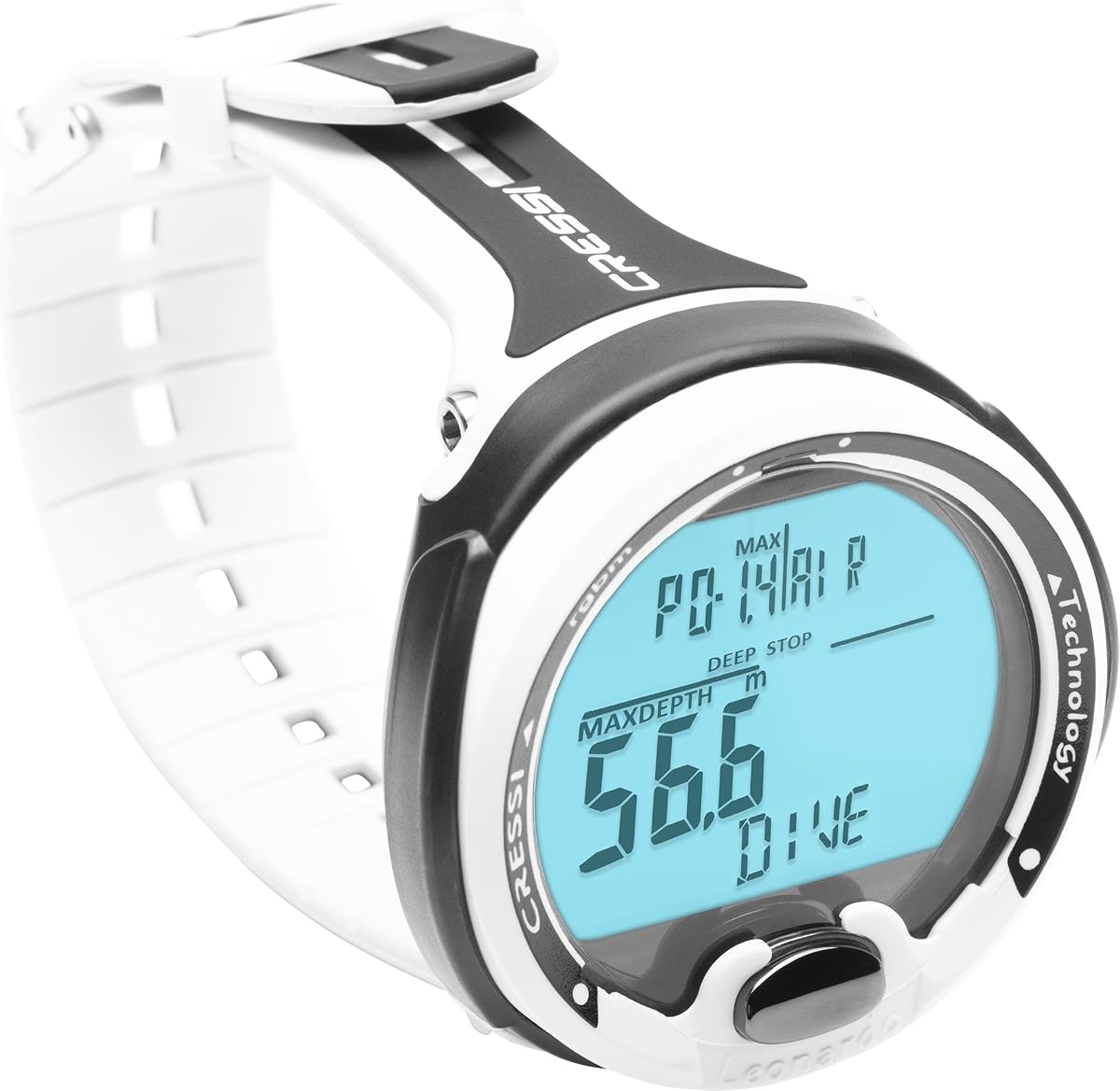
CRESSI Leonardo 2.0 G2 Dive Watch
4.2Editor score
One-button interface simplicity
Air and Nitrox modes
Visual and audible alarms
This guide compares the top dive computer for beginners models based on usability, safety features, battery life, and connectivity to help new divers choose
Choosing the right dive computer for beginners is crucial for safety and enjoyment underwater. A good model should offer intuitive controls, clear displays, and essential safety alarms without overwhelming the user with complex technical data or steep learning curves.
We compared ten top-rated dive computers focusing on user-friendly interfaces, wireless connectivity, battery longevity, and essential diving modes. Each product was evaluated for its ability to support new divers while providing room to grow as skills and experience expand over time.
Each pick in this list highlights specific strengths like budget-friendliness, advanced tracking, or rugged durability. Please note that prices and availability change frequently, so verify current details before purchasing to ensure you get the best value for your specific diving needs.
4.2Editor score

4.7Editor score

4.7Editor score
The following table provides a side-by-side comparison of key features across all ten selected models. This overview helps you quickly identify which specifications align best with your specific diving style and experience level.


The Shearwater Research Peregrine stands out as a top choice for beginners due to its user-centric design and robust safety features. With a rating of 4.7 stars, it is highly regarded for its ease of use and reliability underwater. This device simplifies complex dive data into clear, actionable information.
We may earn a commission when you buy through this link, at no additional cost to you.
Its two-button interface is designed to be simple to navigate even with gloves on. The state-aware menu structure ensures that you only see options relevant to your current dive mode. Battery life per charge reaches up to 30 hours on medium brightness, ensuring you are ready for multiple dives without frequent recharging.
While it offers professional-grade features, the learning curve for accessing advanced settings might be slightly steep for absolute novices. However, the included USB wireless charging station adds significant convenience and reduces wear on ports over time. These trade-offs are acceptable given the device's longevity and durability.
This computer is ideal for beginners who plan to dive regularly and want a device that will grow with their skills. We recommend it for those who prioritize long-term value and clear display readability during dives.
The state-aware menu structure prevents confusion by only showing relevant options based on current dive status.
316 stainless steel buttons provide excellent corrosion resistance and tactile feedback in wet environments.
We may earn a commission when you buy through this link, at no additional cost to you.
The CRESSI Leonardo 2.0 G2 is an excellent starting point for new divers looking for affordability without sacrificing essential safety features. Rated 4.2 stars, this watch-style computer supports Air, Nitrox, and Gauge modes, making it versatile for various diving setups. Its single-button interface is designed to make menu navigation straightforward underwater.
We may earn a commission when you buy through this link, at no additional cost to you.
Key strengths include its seamless integration with both iOS and Android devices for comprehensive dive tracking. You can transfer dive logs via USB and infrared data transfer to analyze your progress. Visual and audible alarms ensure you stay informed of critical dive data without needing to constantly look at the screen.
The display might not have the highest contrast in bright sunlight compared to more expensive models, and it lacks advanced technical features like trimix support. However, for recreational diving, these limitations are acceptable. The simplicity ensures that new divers focus on safety and environment rather than fiddling with settings.
We recommend this model for budget-conscious beginners who want a reliable watch-style computer with smart connectivity. It is perfect for those who plan to dive casually and need a device that is easy to use right out of the box.
Supporting Air, Nitrox, and Gauge modes allows you to dive with different setups without needing a new device.
Pairing with smartphones allows for easy log sharing and tracking of your underwater adventures over time.
We may earn a commission when you buy through this link, at no additional cost to you.
The SUUNTO D5 offers a modern look with a color display that makes reading dive data easy in various lighting conditions. With a rating of 4.0 stars, it provides essential features like wireless tank pressure monitoring and a digital compass. The 100m waterproof rating ensures reliability for most recreational dive depths.
We may earn a commission when you buy through this link, at no additional cost to you.
Its wireless tank pressure feature allows you to monitor air levels without connecting cables, simplifying your gear setup. Vibration alarms provide a silent way to receive critical alerts which is useful in noisy environments. The digital compass helps with navigation underwater without needing a separate tool.
Users sometimes find the initial setup and menu navigation slightly less intuitive compared to single-button devices. Battery life can vary depending on usage of backlight and connectivity features. These factors are manageable with practice but may require patience for complete beginners.
This computer is best for divers who prefer a sleek wrist design and color visuals. We suggest it for those who want a compact device with wireless capabilities for standard recreational diving activities.
Wireless tank pressure tracking reduces cable clutter and keeps your dive setup streamlined and efficient.
Vibration alerts ensure you receive critical warnings even if visual or audible cues are missed.
We may earn a commission when you buy through this link, at no additional cost to you.
The Garmin Descent X30 is a rugged dive computer designed for those who want advanced features like surface GPS navigation and multi-gas support. It holds a 4.7-star rating and features a 2.4-inch vibrant color display that allows for high visibility underwater. The housing is made with recycled ocean-bound plastics, adding an eco-friendly touch.
We may earn a commission when you buy through this link, at no additional cost to you.
Its surface GPS capability helps you navigate to dive sites and mark entry points accurately. You can customize your screens with up to three data fields per page to see exactly what you need. NDL Aware depth metrics help you extend bottom time safely by showing real-time impacts on no-decompression limits.
The price is significantly higher than beginner models, and the sheer number of features might overwhelm a new diver. However, if you plan to advance in diving skills, the flexibility is valuable. The flip-screen mode allows button orientation customization for left or right-handed divers.
We recommend this for divers seeking premium technology and environmental responsibility. It is ideal for those who want a device that covers everything from recreational to technical diving needs.
NDL Aware metrics provide real-time feedback on how depth changes impact your no-decompression limits.
The housing and bezel are crafted from recycled ocean-bound plastics to support environmental sustainability.
We may earn a commission when you buy through this link, at no additional cost to you.
The Mares Puck Pro EZ is designed for clear visibility with a high-contrast screen that keeps dive data readable at all times. Rated 4.8 stars, it utilizes the Buhlmann ZH-L16C algorithm with dual gradient factors for safe decompression calculations. Its single-button interface makes navigation easy even underwater.
We may earn a commission when you buy through this link, at no additional cost to you.
It supports single gas Nitrox compatibility which is perfect for recreational divers who use enriched air mixtures. The replaceable power source supports up to 100 dives reducing the need for frequent battery changes. You can transfer your experience easily with Bluetooth-enabled connectivity to smart devices.
While it offers great readability and a reliable algorithm, it lacks some advanced customization options found in higher-end models. The data tracking is functional but basic. These limitations are acceptable for users who want simplicity and reliability over advanced features.
We recommend this for divers who prioritize clear data visibility and a simple control system. It is a great choice for those who want a dependable device without complicated menus.
The Buhlmann ZH-L16C algorithm with dual gradient factors ensures reliable and safe dive calculations.
A replaceable power source supports up to 100 dives allowing for long-term use between battery changes.
We may earn a commission when you buy through this link, at no additional cost to you.
The Cressi Donatello offers a straightforward approach to dive computer design with a single-button interface that simplifies underwater navigation. Rated 4.4 stars, it transitions effortlessly between air and nitrox modes. It also includes a comprehensive freediving gauge mode making it suitable for both scuba and breath-hold sessions.
We may earn a commission when you buy through this link, at no additional cost to you.
One of its key strengths is the customizable ascent planning which allows you to select deep stops for personalized ascent management. The optional IR interface facilitates seamless data transfers to both Windows and Mac systems. This flexibility makes it a versatile tool for enthusiasts seeking one reliable device.
The data transfer requires an optional interface which adds a step to post-dive routines compared to built-in Bluetooth models. The user interface is basic and might feel dated to those used to color screens. However, it remains highly functional for core diving needs.
We recommend this for divers who want a simple and versatile device for both scuba and freediving. It is ideal for those who value single-button simplicity and customizable ascent planning.
The freediving gauge mode supports both scuba and breath-hold sessions in one versatile device.
User-selectable deep stops allow for personalized ascent management to enhance safety during dives.
We may earn a commission when you buy through this link, at no additional cost to you.
The Cressi Raffaello includes a built-in digital compass which eliminates the need for a separate tool and enhances underwater precision. It features a RGBM-based mixed-gas planning system allowing meticulous preparation for multiple gas mixes. Bluetooth and USB connectivity make transferring dive history easy.
We may earn a commission when you buy through this link, at no additional cost to you.
Its four operating modes cover apnea and gauge activities supporting both freediving and traditional scuba activities. The user-replaceable battery offers an expected life of 4 years reducing maintenance downtime. This long life ensures your wrist computer is ready for every journey.
The mixed-gas planning can be complex for absolute beginners compared to simple air modes. Replacing the battery every four years requires effort though it is manageable. These factors are acceptable given the long-term value and versatility of the device.
We recommend this for divers who want navigation and mixed-gas capabilities in one device. It is best for those who dive regularly and want a long-lasting battery solution.
The built-in digital compass eliminates the need for a separate compass enhancing underwater precision.
RGBM mixed-gas planning system allows for meticulous preparation for multiple gas mixes.
We may earn a commission when you buy through this link, at no additional cost to you.
The Garmin Descent Mk3i features a stunning 1.4-inch AMOLED display and a 51mm titanium bezel for a premium look. Rated 4.6 stars, it includes advanced features like dive readiness tools and SubWave sonar technology. It stores up to 200 dive logs right on the wrist.
We may earn a commission when you buy through this link, at no additional cost to you.
The dive readiness tool uses lifestyle factors to advise on preparedness while DiveView maps offer bathymetric contours for thousands of sites. Multi-band GPS ensures superior accuracy while you are out on the water. This device is built for durability with scratch-resistant sapphire lens.
The high cost and weight make it less suitable for beginners who want simplicity. The complexity of features like Sonar messaging might be underused. These trade-offs are acceptable for those seeking a comprehensive luxury watch.
We recommend this for those who want a high-end smartwatch that excels in diving. It is ideal for users who value durability and advanced health tracking.
The tool advises on preparedness based on sleep, stress, and recent dives to improve dive planning.
Titanium bezel and scratch-resistant sapphire lens provide long-lasting durability and style.
We may earn a commission when you buy through this link, at no additional cost to you.
The Garmin Descent G2 offers a compact 46mm watch-style design with a 1.2-inch AMOLED display and sapphire lens. It supports recreational, technical, and freediving with multi-GNSS support for marking entry points. 100% of the plastic comes from recycled ocean-bound plastics.
We may earn a commission when you buy through this link, at no additional cost to you.
It provides smart notifications and health metrics like Pulse Ox and sleep score alongside dive tracking. Battery life reaches 27 hours in dive mode and 10 days in smartwatch mode. This device is perfect for everyday wear while also serving as a dive tool.
The display is smaller than larger models which might affect readability for some users. It is expensive for those who only want basic dive tracking. However, the combination of smartwatch and dive features is unique.
We recommend this for divers who want a sleek daily smartwatch with dive capabilities. It is best for those who prioritize health monitoring and compact design.
The housing and buttons are made from 100% recycled ocean-bound plastics to support sustainability.
Smart notifications and health metrics make it suitable for everyday wear beyond diving.
We may earn a commission when you buy through this link, at no additional cost to you.
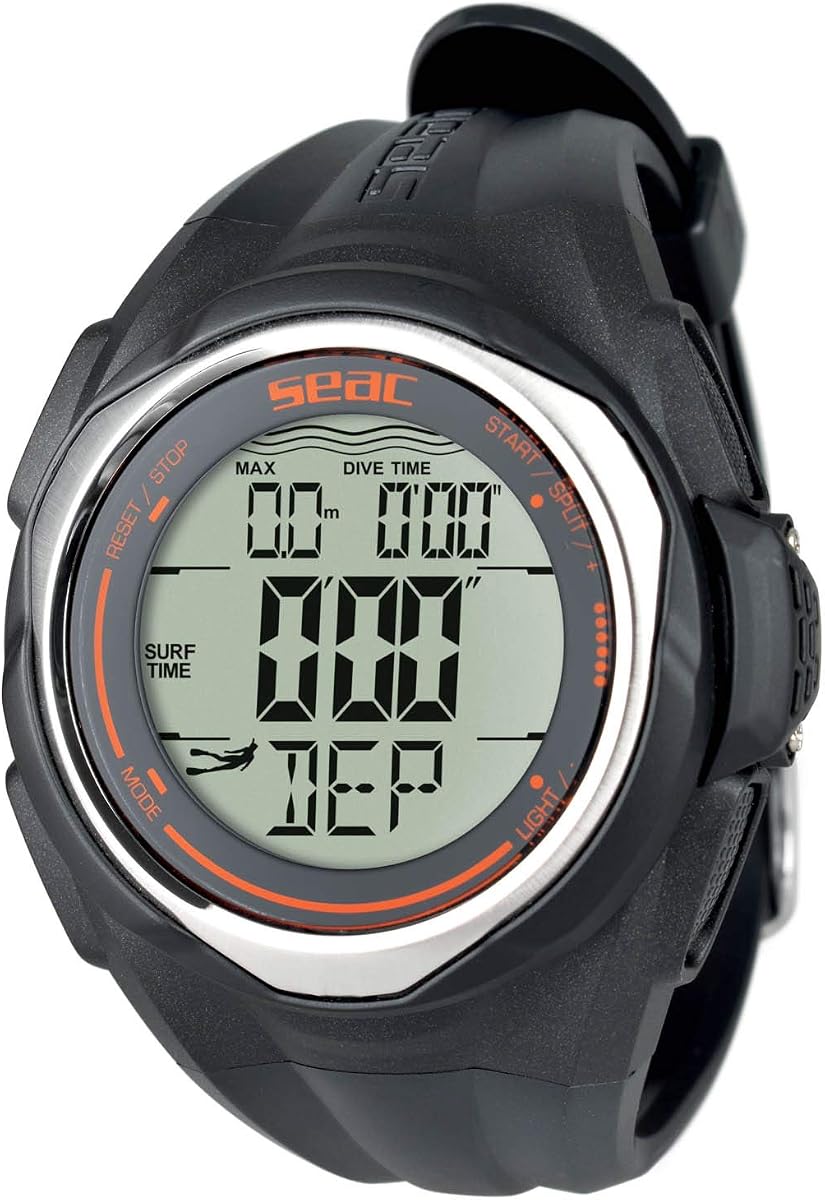
The SEAC Partner is a wrist-mount freediving computer designed for simplicity and affordability. It records sessions up to 99 dives with a countdown function and stopwatch. It is 100mt water resistant and runs on a standard CR2032 battery for easy maintenance.
We may earn a commission when you buy through this link, at no additional cost to you.
Its backlit display ensures you can read data in low light conditions. The device is perfect for breath-hold divers who do not need complex decompression tracking. It is one of the most accessible options for new freedivers.
It lacks decompression logic and advanced scuba features which limits its utility for scuba divers. The recording limit of 99 dives is fine for many but might be reached quickly by frequent users. These trade-offs are acceptable for casual freediving.
We recommend this for beginners in freediving who need a basic and affordable device. It is best for those who want to track breath-hold sessions without complexity.
Records your freediving session up to 99 dives with stopwatch and countdown functions.
It works with a standard CR2032 battery which is easy to replace.
We may earn a commission when you buy through this link, at no additional cost to you.
Selecting the right dive computer involves balancing safety, ease of use, and features. This guide outlines key factors to consider.
Beginners should prioritize devices with intuitive interfaces such as one or two buttons. Complex menus can distract from safety and cause stress underwater.
Choose a screen with high contrast and adequate backlight. Good readability ensures you can check depth and time quickly in low-light conditions.
Ensure the computer supports Air and Nitrox modes. If you plan to freedive, a model with a gauge or apnea mode is essential.
Bluetooth or USB connectivity allows for easy logging and sharing. This helps you track progress and review dive stats after your trip.
Long battery life reduces charging anxiety. Consider whether the battery is replaceable or rechargeable based on your travel needs.
Look for water resistance ratings and sturdy build materials. Corrosion-resistant buttons and housing ensure the device lasts longer in saltwater.
Visual and audible alarms for critical limits are vital. These alerts help you stay within safe zones without constant monitoring.
Set a budget that balances cost with needed features. Beginners do not need technical trimix support unless they plan to advance quickly.
Always read the manual before your first dive to understand alarm settings and modes. Familiarize yourself with button functions on land.
Yes, a dive computer is essential for beginners as it provides real-time depth and time data. It helps you stay within safe limits and reduces the risk of decompression sickness.
Not all dive computers support freediving. Ensure the model has an apnea or gauge mode if you plan to breath-hold dive.
Follow the manual to set language and alarms. Ensure you understand the menu structure before taking it underwater.
Battery life varies by model, but many offer 30 hours or more. Rechargeable models save waste but may need charging between dives.
Yes, most models store logs that can be transferred to a computer or phone. This helps you analyze your skills over time.
Keep it dry and in a protective case. Avoid extreme temperatures to maintain battery health and screen clarity.
Set alarms to alert you at shallow limits. Do not ignore audible warnings as they indicate you are approaching unsafe zones.
While you can borrow, personal fit matters. Owning one ensures hygiene and familiarity with controls for safety.
The top picks include the Shearwater Peregrine for overall value, CRESSI Leonardo 2.0 for budget, and Garmin Descent X30 for premium features.
Focus on interface simplicity and safety alarms when making your choice. These factors directly impact your comfort and security underwater.
Prices and models change over time so always check current specs before buying. A good investment will serve you well for years of exploration.